China–UK Relations: A Personal Perspective
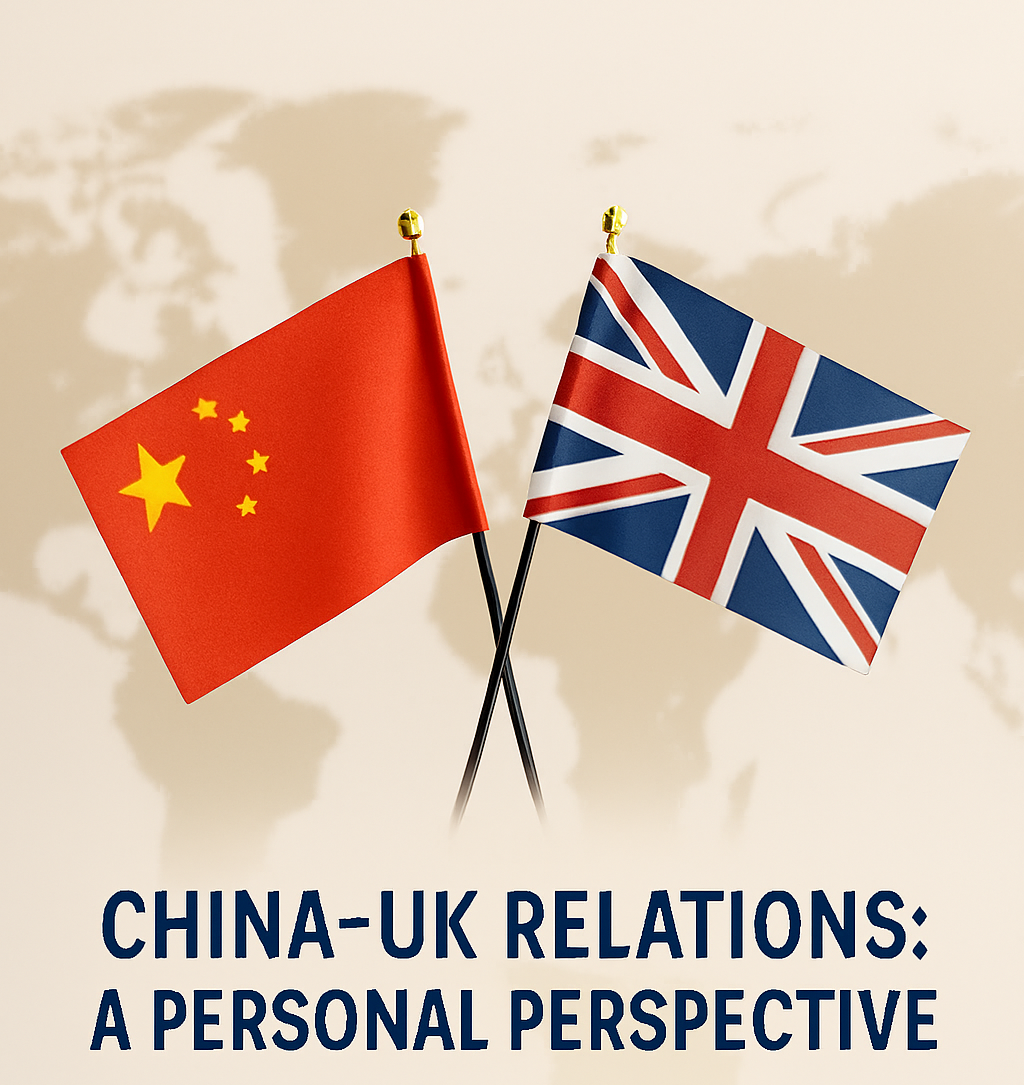
I was born in a small village in China and, like many of my peers, followed a familiar path: primary school, junior high school, senior high school, university, work, marriage. Although I have visited many cities across China, I have never been abroad. My understanding of the United Kingdom began at university, when I started following political, economic, and cultural news through the BBC.
Today, I am writing this blog about China–UK relations at the request of a friend, but also because I have recently begun to engage in cultural exchanges, tourism, and retail trade between China and Europe. This experience has made me pay much closer attention to how China and the UK interact.
Different Backgrounds, Different Perspectives
There are, of course, political stances and ideological differences between countries. When we communicate with any country or person, we need an inclusive attitude. Everyone grows up in a different environment, so their words and actions can vary greatly. The same is true for nations.
Looking at the current international situation, the United States is still the most developed country. To maintain its leading position, it must constantly strengthen itself, and sometimes weaken others. This shapes much of today’s global landscape and influences how countries relate to one another.
China and the UK: Pragmatic Partners
Recently, British Prime Minister Keir Starmer visited China. As someone commented, the world can feel like a huge makeshift theatre group, with the script changing every day and everyone simply trying to survive. Behind the changing “scripts”, however, there are real interests and long-term choices.
A little‑known fact is that a UK Prime Minister also visited China about eight years ago. The “awakening” of adults is often not driven by pure wisdom, but by their wallets. At a press conference of China’s Ministry of Commerce, the spokesperson made a rare high‑profile statement, saying that “we are each other’s important economic and trade partners” and that both sides “attach great importance to each other”.
In recent years, China–UK economic ties have remained significant. Bilateral trade has reached over 100 billion US dollars, and two‑way investment stock is tens of billions of US dollars. Business is mutual, and so is trust.
Keir Starmer’s visit this time is essentially about economic cooperation. There are no major geopolitical conflicts or outstanding historical issues between China and the UK, so there is no fundamental conflict of interests. This creates space for a more pragmatic, mutually beneficial relationship.
A New 3C Principle
“To be or not to be” is the profound question that Shakespeare poses to Britain and the world. For China–UK relations, the question is how to “be” in a way that is stable, constructive, and beneficial to both sides.
In my view, a healthy China–UK relationship should follow a new 3C principle:
Communication – talk openly and frequently, even when there are disagreements.
Consensus – seek common ground on shared interests, especially in trade, education,
culture, and climate.
Cooperation – turn words into action through concrete projects and long‑term
partnerships.
Only by respecting each other, communicating regularly, moving towards each other, and finding consensus can China and the UK join hands for mutual benefit and cooperation. From my small village in China to the wider world, I hope to see this relationship grow in a way that is both practical and hopeful.