Chongqing 9‑Day Culture, Hotpot & AI Experience Center Escorted Tour

Price on request

Chongqing 9‑Day Culture, Hotpot & AI Experience Center Escorted Tour Overview

This immersive 9‑day, 8‑night escorted tour showcases the very best of Chongqing, Wulong, Dazu, Nanchuan and Fuling — blending dramatic natural landscapes, rich cultural heritage, authentic hotpot traditions and cutting‑edge AI innovation. From the breathtaking Three Natural Bridges and alpine meadows of Fairy Mountain to the mysterious 816 Underground Nuclear Base and the world‑renowned Dazu Rock Carvings, this journey reveals the full magic of China’s famous “8D Mountain City.”

You’ll explore historic Ciqikou Ancient Town, wander through the atmospheric Shibati Traditional Area, relax in natural hot springs at Jinfo Mountain, enjoy a glittering Two Rivers Night Cruise, and conclude with an inspiring visit to the Chongqing Robotics & AI Application Experience Center — where the future of intelligent technology comes to life.

Tour Highlights:
• Experience Chongqing’s iconic 8D city attractions including Liziba Monorail and Hongyadong.
• Explore Ciqikou Ancient Town, E’ling Park and the vibrant Jiefangbei district.
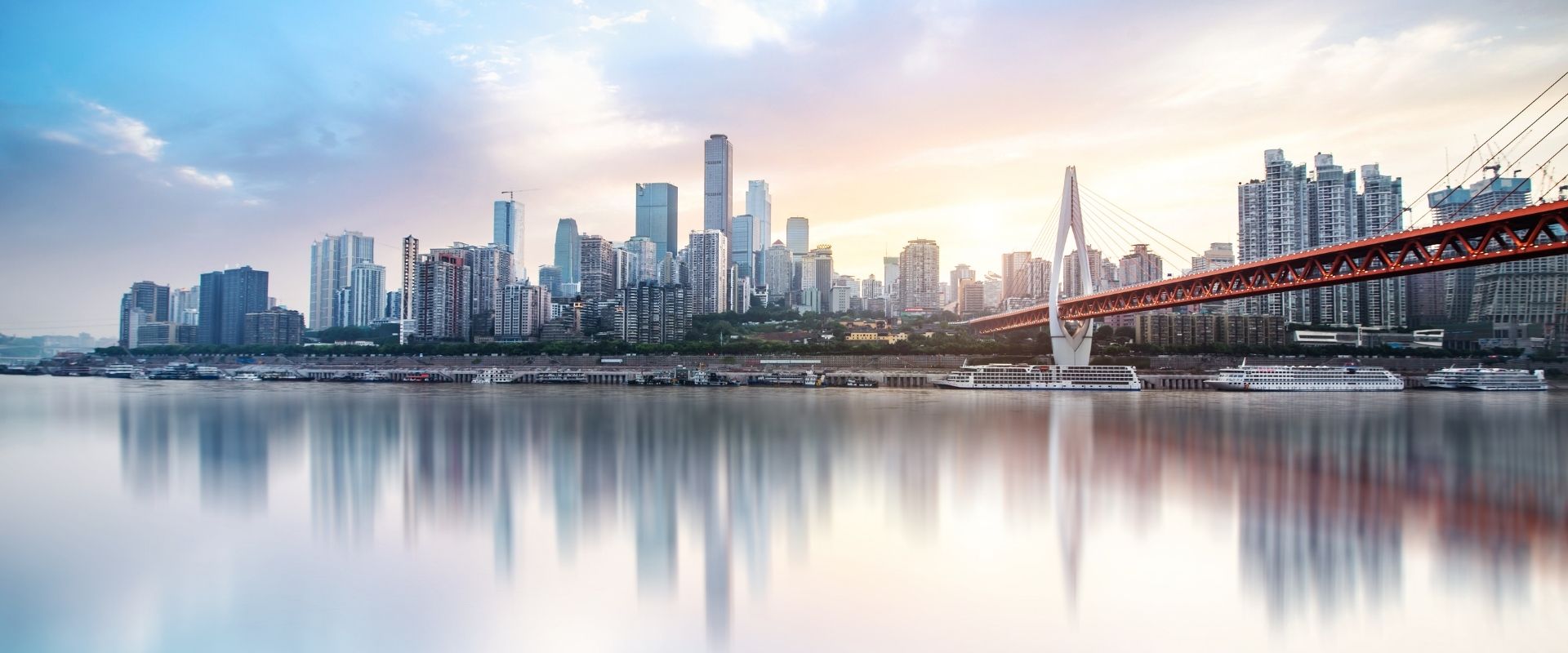
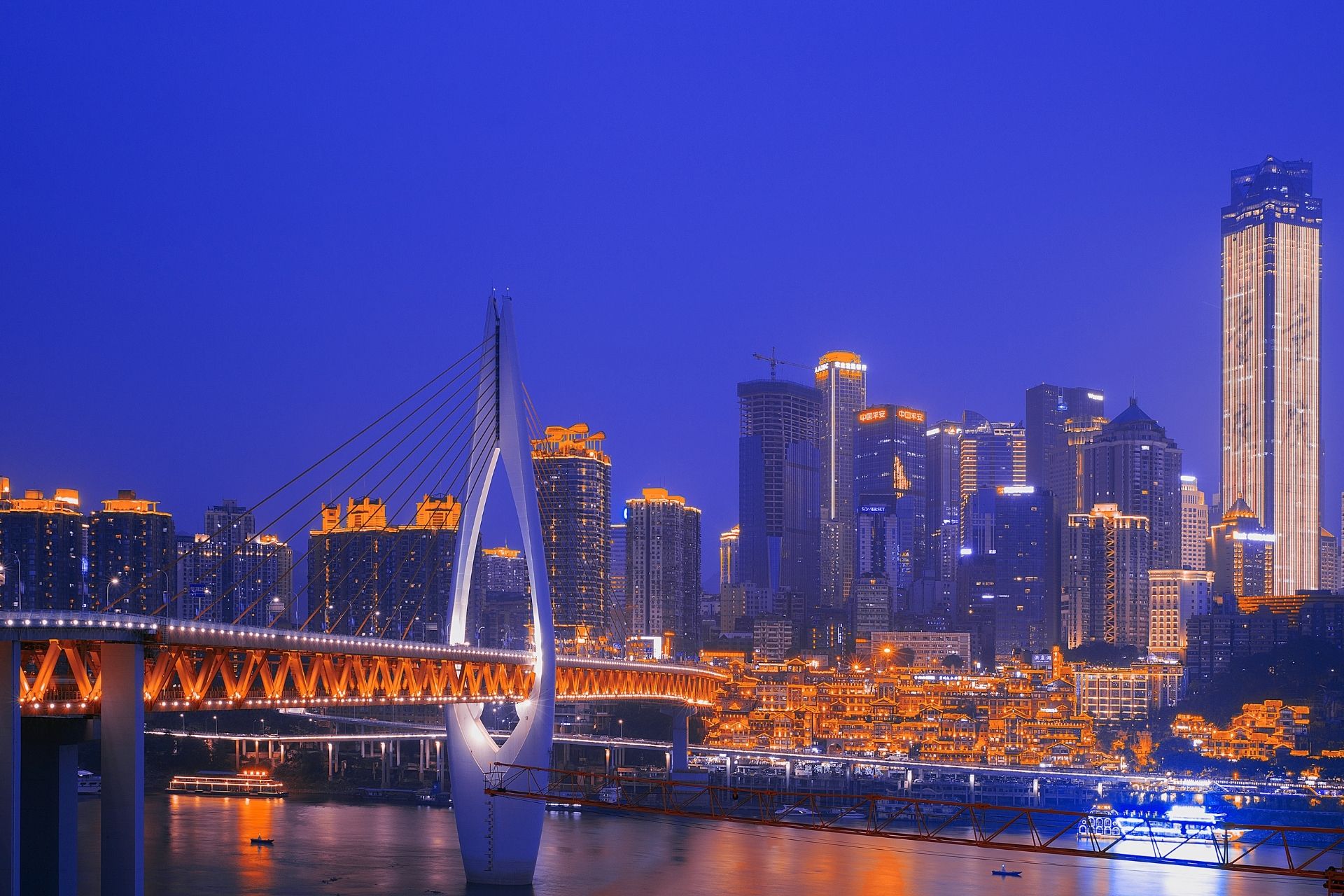
• Enjoy a scenic Two Rivers Night Cruise showcasing Chongqing’s illuminated skyline.
• Discover Dazu Rock Carvings, a UNESCO World Heritage masterpiece.
• Visit the legendary 816 Underground Nuclear Base — the world’s largest man‑made cave system.
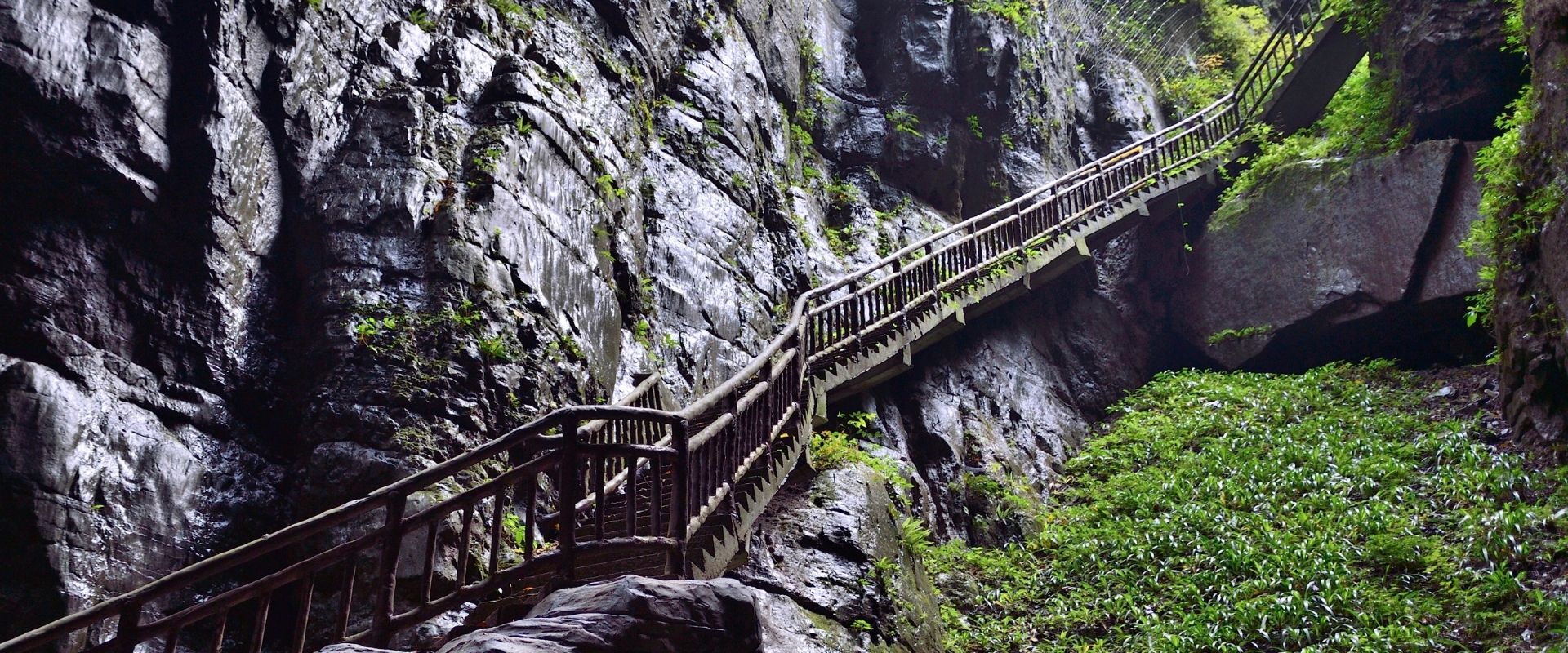
• Marvel at Wulong’s Three Natural Bridges and the alpine scenery of Fairy Mountain.
• Relax in a premium hot spring resort at Jinfo Mountain.
• Step into the future at the Chongqing Robotics & AI Application Experience Center.


Inclusions:
• 8 nights in carefully selected 4‑star hotels
• Daily breakfast and selected local specialty meals
• Private transportation by air‑conditioned vehicle
• Professional English‑speaking tour guide
• All first‑gate entrance tickets and required shuttle buses
• Hot spring experience at Jinfo Mountain
• Two Rivers Night Cruise
• No forced shopping stops


Ideal For:
Travellers seeking a comfortable, well‑organised and culturally rich 9‑day journey through Chongqing and its surrounding regions. Perfect for couples, families, small groups and anyone who wants to experience the region’s unique blend of history, nature, cuisine and modern AI innovation in one seamless tour.

Chongqing 9‑Day Culture, Hotpot & AI Experience Center Escorted Tour (Escorted Tour)

Product Code: CQ09-CULTURE-HOTPOT-AI-ES • Fully escorted guided tour • English-speaking guide available

Tour Specifications & Key Details

Duration: 9 days / 8 nights
Start / End: Chongqing Jiangbei International Airport (CKG)
Level: Easy–moderate walking

Overview

This 9‑day escorted tour blends Chongqing’s cultural heritage, dramatic mountain landscapes, authentic hotpot traditions and cutting‑edge AI innovation. Explore iconic 8D city attractions, wander through Ciqikou Ancient Town, enjoy a Two Rivers Night Cruise, and discover UNESCO‑listed Dazu Rock Carvings. Venture into the legendary 816 Underground Nuclear Base, marvel at Wulong’s Three Natural Bridges, relax in Jinfo Mountain’s natural hot springs, and conclude with an immersive visit to the Chongqing Robotics & AI Application Experience Center. With private transport, curated meals and an English‑speaking guide, this journey offers comfort, culture and unforgettable scenery.

Product CodeCQ09-CULTURE-HOTPOT-AI-ES
Tour TypeEscorted guided, land‑only
Accommodation4‑star hotels (double/twin)
LanguagesEnglish-speaking guide available
SeasonalityYear‑round; best from Mar–Jun & Sep–Nov

Pricing & Booking

Escorted Tour Package

  • Price is per person, based on twin or double room occupancy
  • Single supplement applies for solo travellers
  • Customisable for couples, families and small groups

What's Included

  • 8 nights hotel accommodation (4‑star standard)
  • Daily breakfast and selected local specialty meals
  • Private air‑conditioned transport throughout
  • All first‑gate entrance tickets
  • Required scenic‑area transport (Jinfo Mountain cable car, Wulong shuttles, etc.)
  • Two Rivers Night Cruise
  • Professional English‑speaking guide
  • Travel accident insurance
  • No forced shopping stops

What's Not Included

  • International flights to/from Chongqing
  • Optional activities not listed in the itinerary
  • Visas, tips and personal expenses
  • Additional insurance coverage

Key Destinations & Highlights


Core Stops

Experiences

  • Explore dramatic karst canyons and natural bridges
  • Discover China’s largest underground military cave system
  • Ride the famous Yangtze River Cableway
  • See the viral Liziba “train through the building” monorail
  • Enjoy a Two Rivers Night Cruise
  • Walk through alpine meadows on Fairy Mountain
  • Experience immersive cultural shows and performances
  • Enjoy curated Chongqing cuisine and hotpot

Operational Details

Start PointChongqing Jiangbei International Airport (CKG)
End PointChongqing Jiangbei International Airport (CKG)
TransportPrivate coach; scenic‑area shuttle buses
GuideEnglish‑speaking guide available
Maximum PaxTypically
Booking Lead TimeRecommended 14–30 days

Chongqing 9‑Day Culture, Hotpot & AI Experience Center Escorted Tour Itinerary

This 9‑day, 8‑night escorted tour showcases Chongqing’s cultural heritage, dramatic mountain landscapes, authentic hotpot traditions and cutting‑edge AI innovation. With private transport, curated meals, comfortable accommodation and an English‑speaking guide, this itinerary offers a seamless and immersive journey through one of China’s most fascinating regions.

  • Day 1
  • Day 2
  • Day 3
  • Day 4
  • Day 5
  • Day 6
  • Day 7
  • Day 8
  • Day 9

Day 1 – Arrival in Chongqing

Arrive in Chongqing, where your private driver or guide will meet you at the airport. Transfer to your hotel and enjoy free time to rest or explore the city at your own pace.

Evening:

Free time to explore.

Accommodation: Chonqqing ★★★★ Yifei Hotel Hongyadong Jiefangbei or similar

Meals: None

Day 2 – Liziba Monorail • E’ling Park • Ciqikou Ancient Town • Two Rivers Night Cruise

Morning:

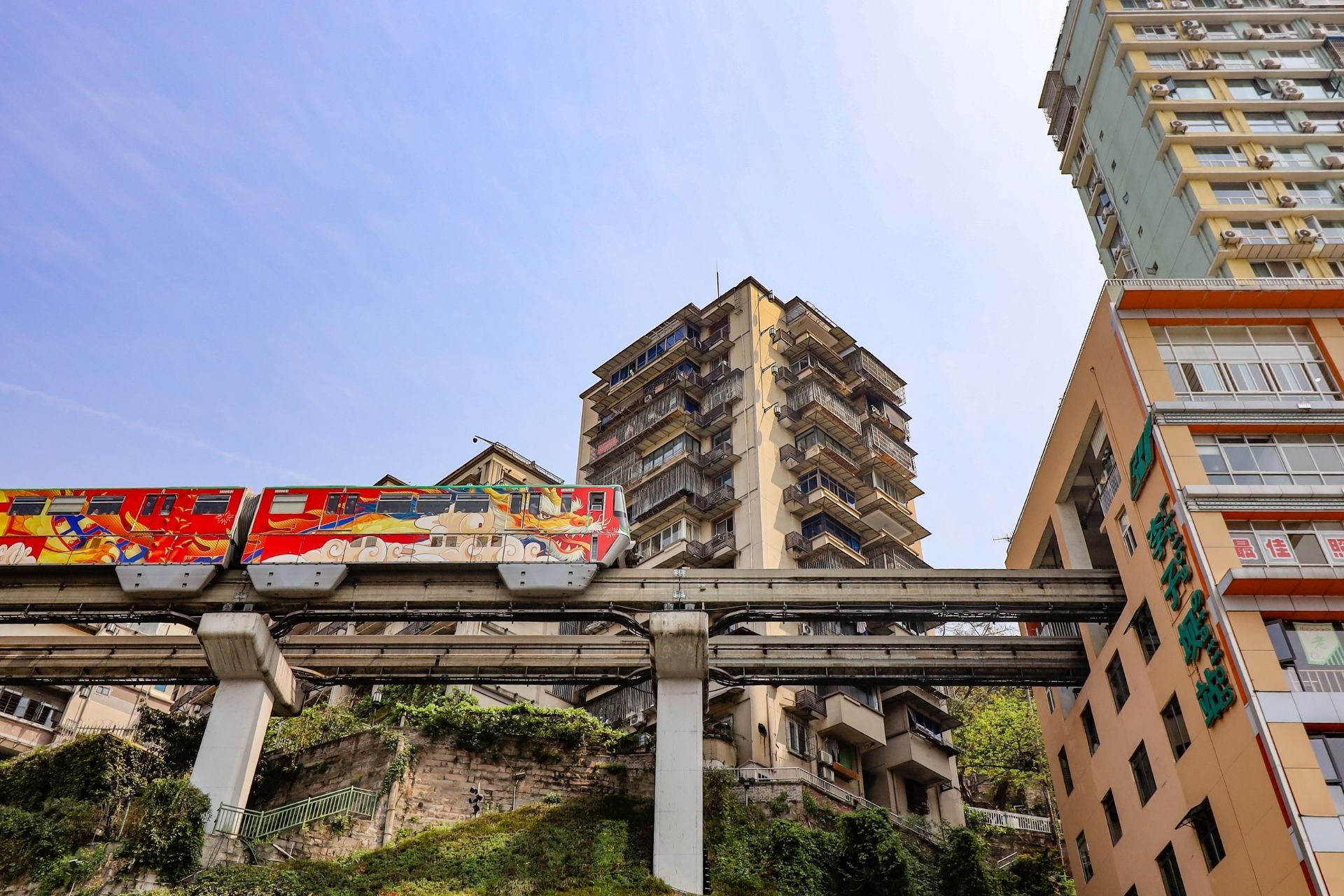
After breakfast, visit the Liziba Light Rail Through‑Building Viewing Platform, including a monorail experience from Jiaochangkou Station to Fotuguan Station. Liziba is China’s first “rail‑through‑building” elevated station, where the train passes directly through the 6th–7th floors of a residential building. Riding Line 2 offers a unique journey: climbing along the riverside, passing Niujiaotuo, witnessing the famous “train through the building” scene, and arriving at Fotuguan.

In spring, this route becomes the viral “Train to Spring,” gliding through blooming plum blossoms. The entire ride blends river views, hillside scenery and Chongqing’s iconic 3D cityscape. Metro Line 2 provides direct access, and visiting during off‑peak hours offers the best photo opportunities.

Continue to E’ling Park, originally built in 1909 as a private garden. Located at one of Chongqing’s highest points, the seven‑storey Qiansheng Tower offers a 360° panoramic view of the Yangtze and Jialing Rivers and the city skyline. The park features banyan‑tree bridges, pavilions, and former consulate buildings that reflect the charm of old Chongqing.

The rail transit Liziba station Landscape of Chongqing Eling Park, China

Lunch: Local specialty


Afternoon:

After lunch, explore Ciqikou Ancient Town, founded during the Song Dynasty. Known for its “one river, two streams, three mountains and four main streets,” Ciqikou was once a bustling port and trading hub along the Jialing River.

With its stone‑paved streets, traditional stilt houses, temples, teahouses and local snacks, Ciqikou is considered a living symbol of old Chongqing — often called “Little Chongqing.”

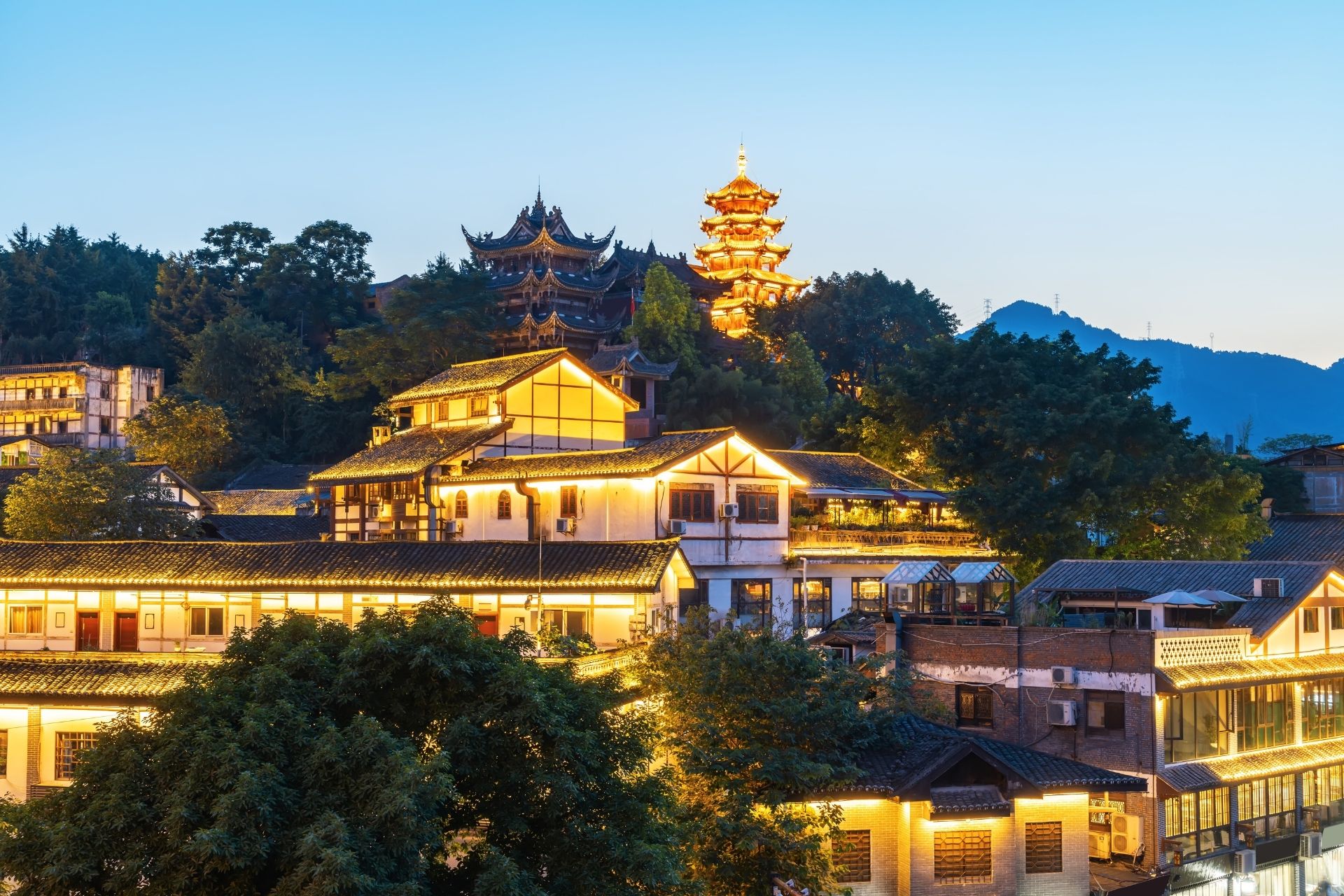
Famous ancient town and Temple Pagoda in Ciqikou, Chongqing, China

Dinner: Local specialty dishes

Evening:

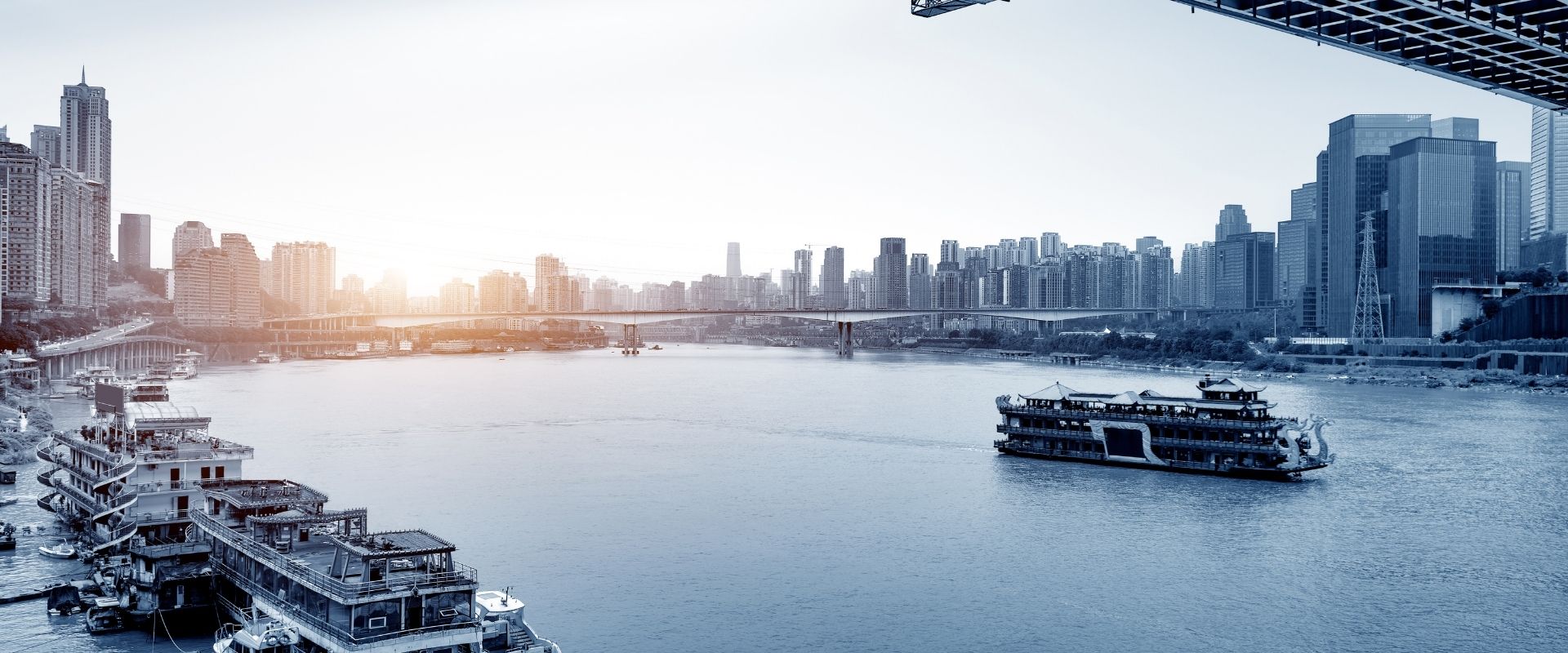
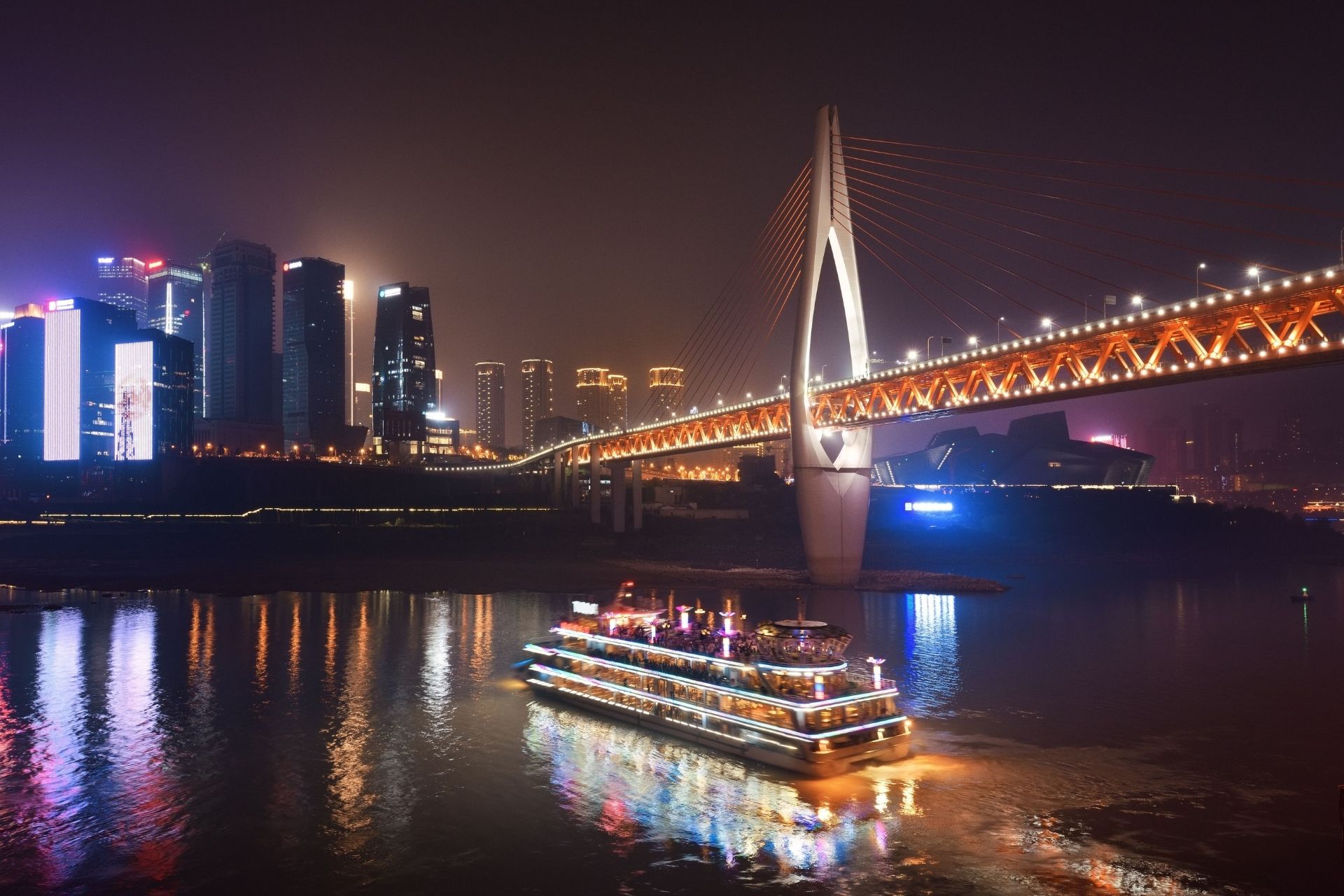
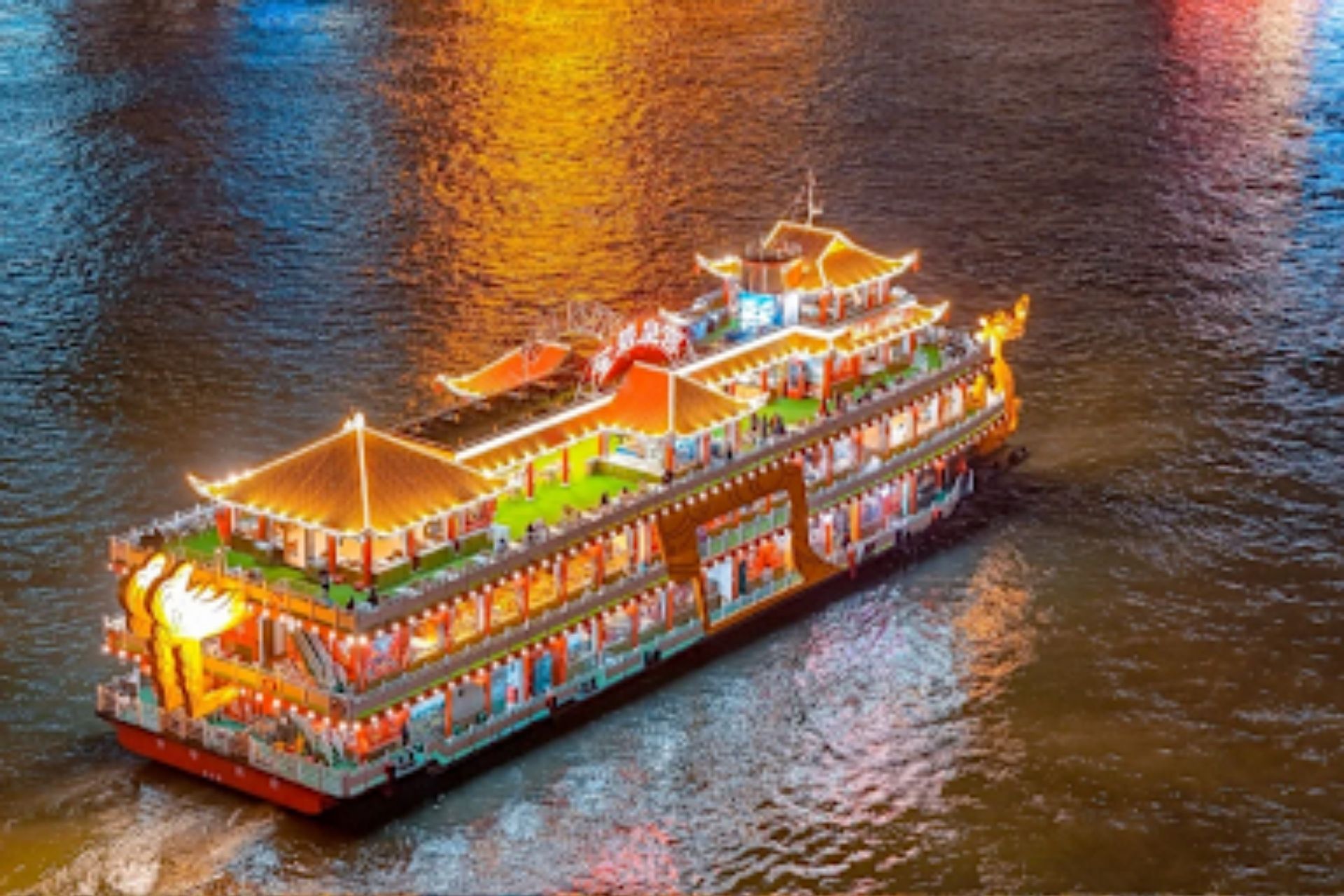
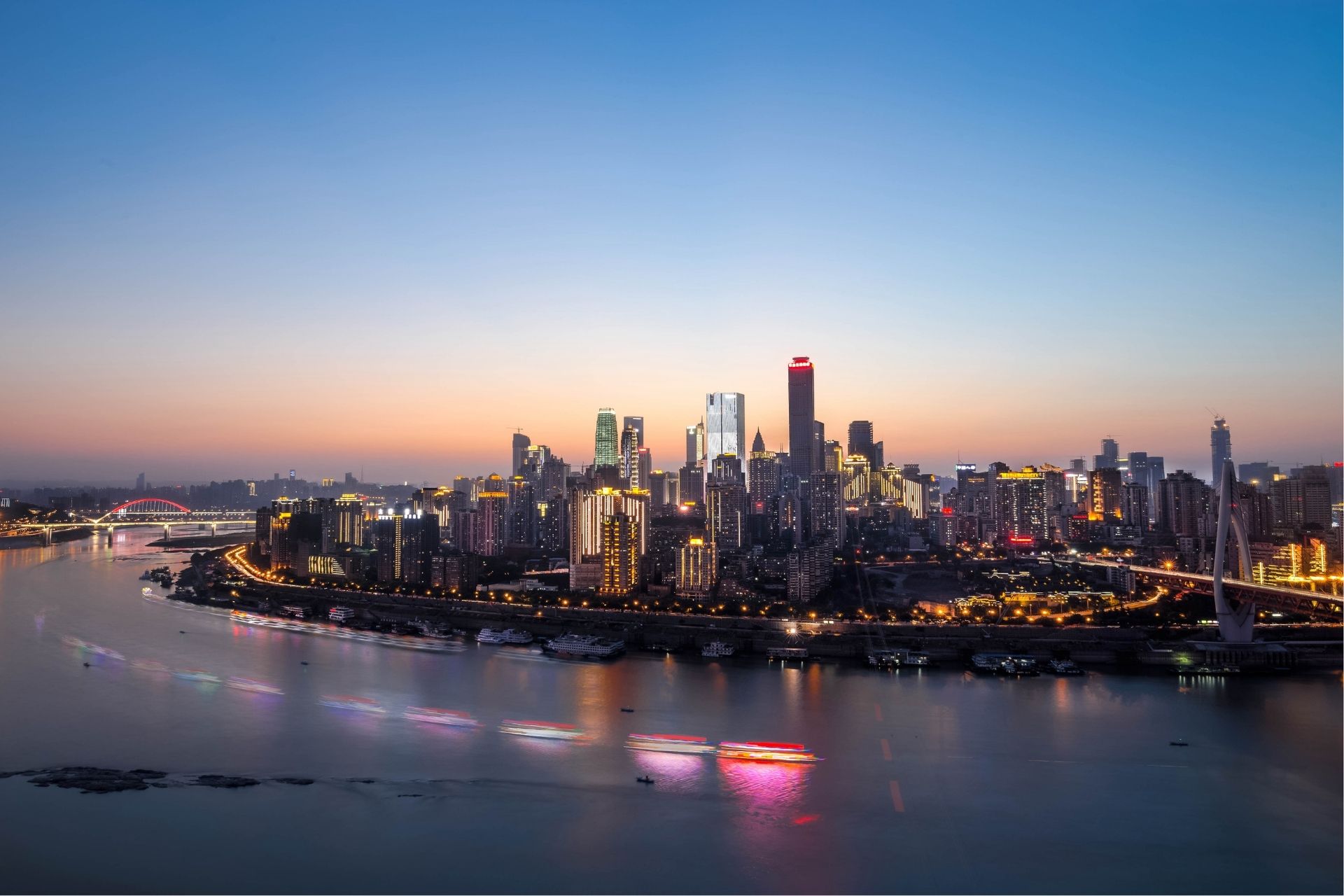
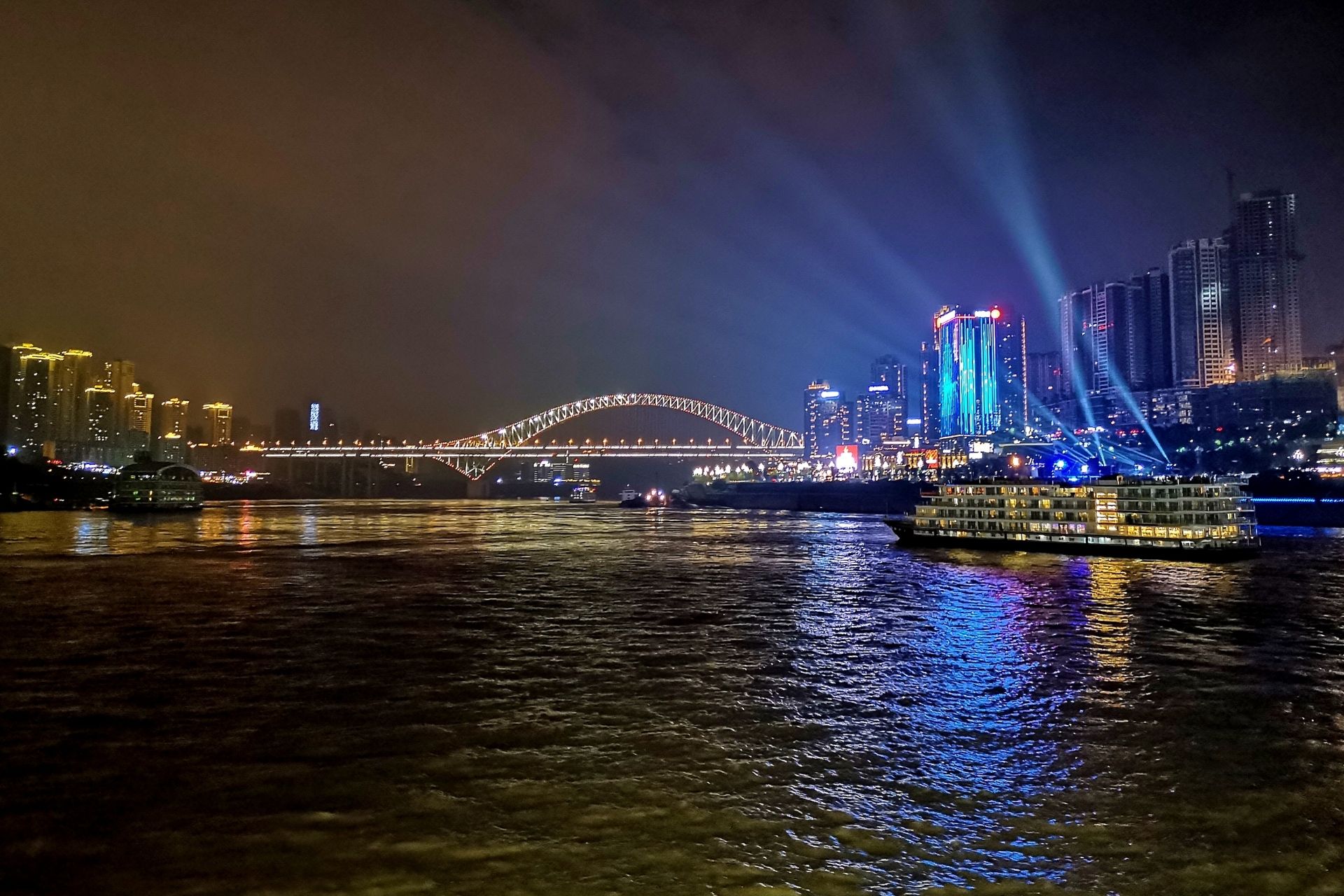
After dinner, enjoy a Two Rivers Night Cruise, a signature Chongqing experience combining sightseeing, night‑view photography and entertainment. Popular cruise ships such as the “Chaotianmen” offer comfortable seating and panoramic river views.

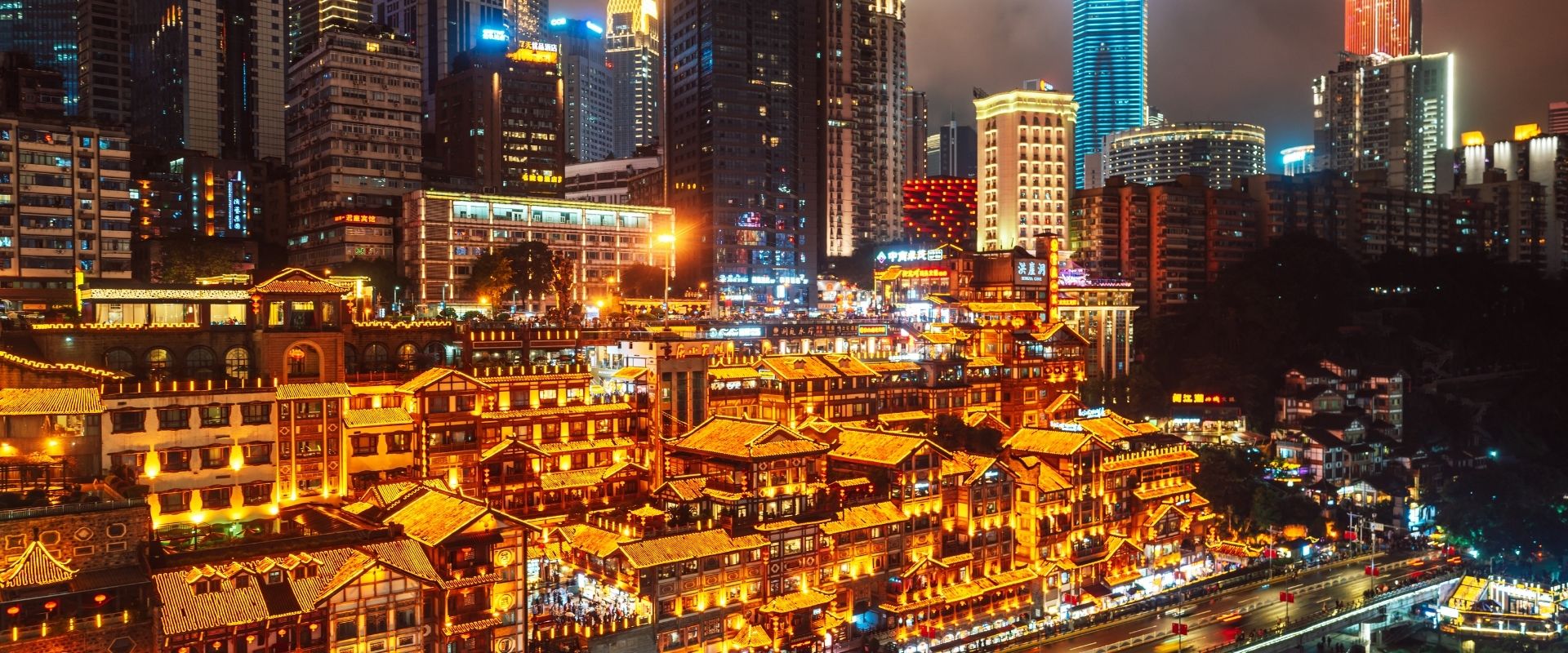
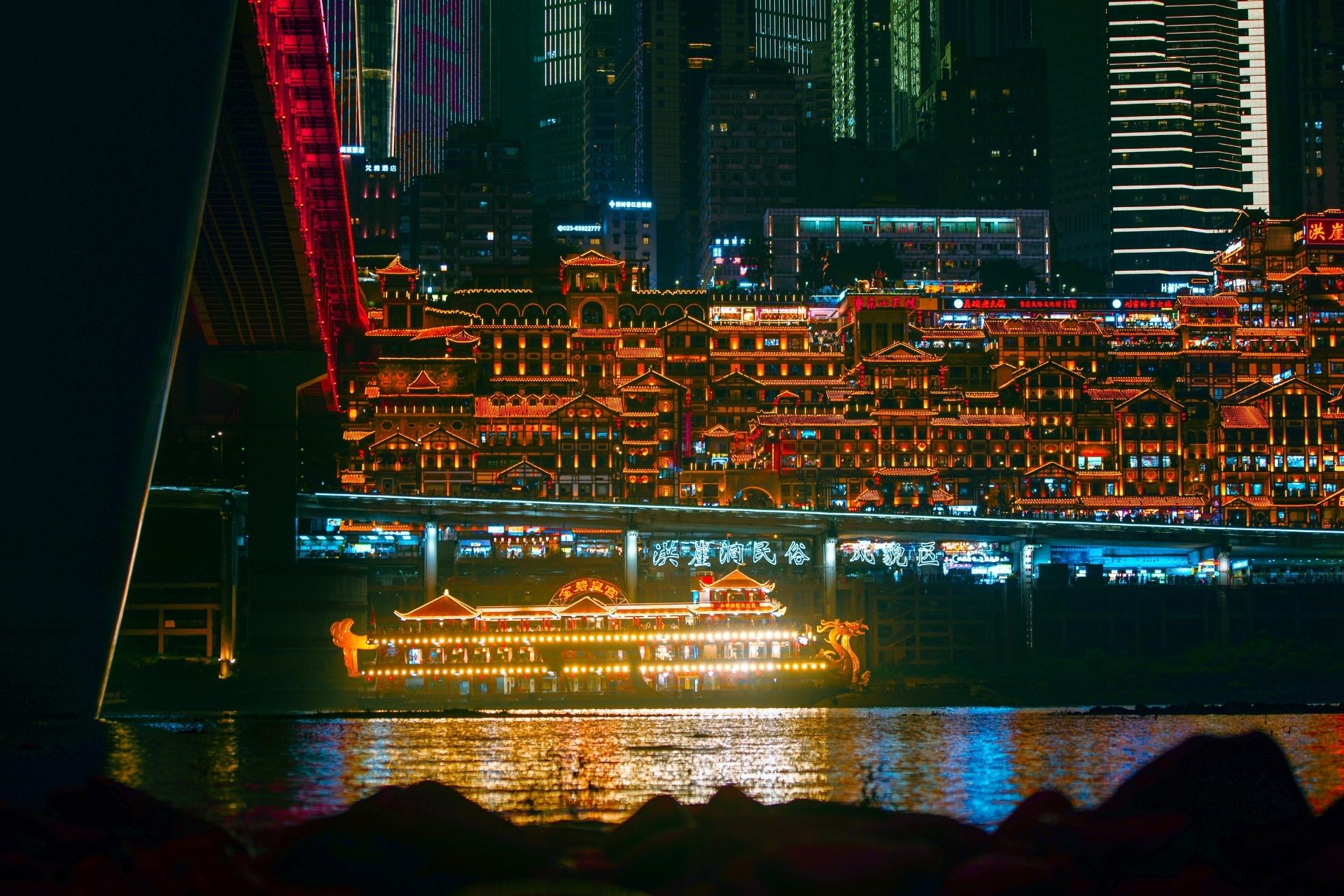
As the boat sails along the Yangtze and Jialing Rivers, you’ll admire illuminated landmarks including Qiansimen Bridge, Hongyadong, and the glittering skyline of the riverside districts — a perfect way to experience the charm of Chongqing at night.

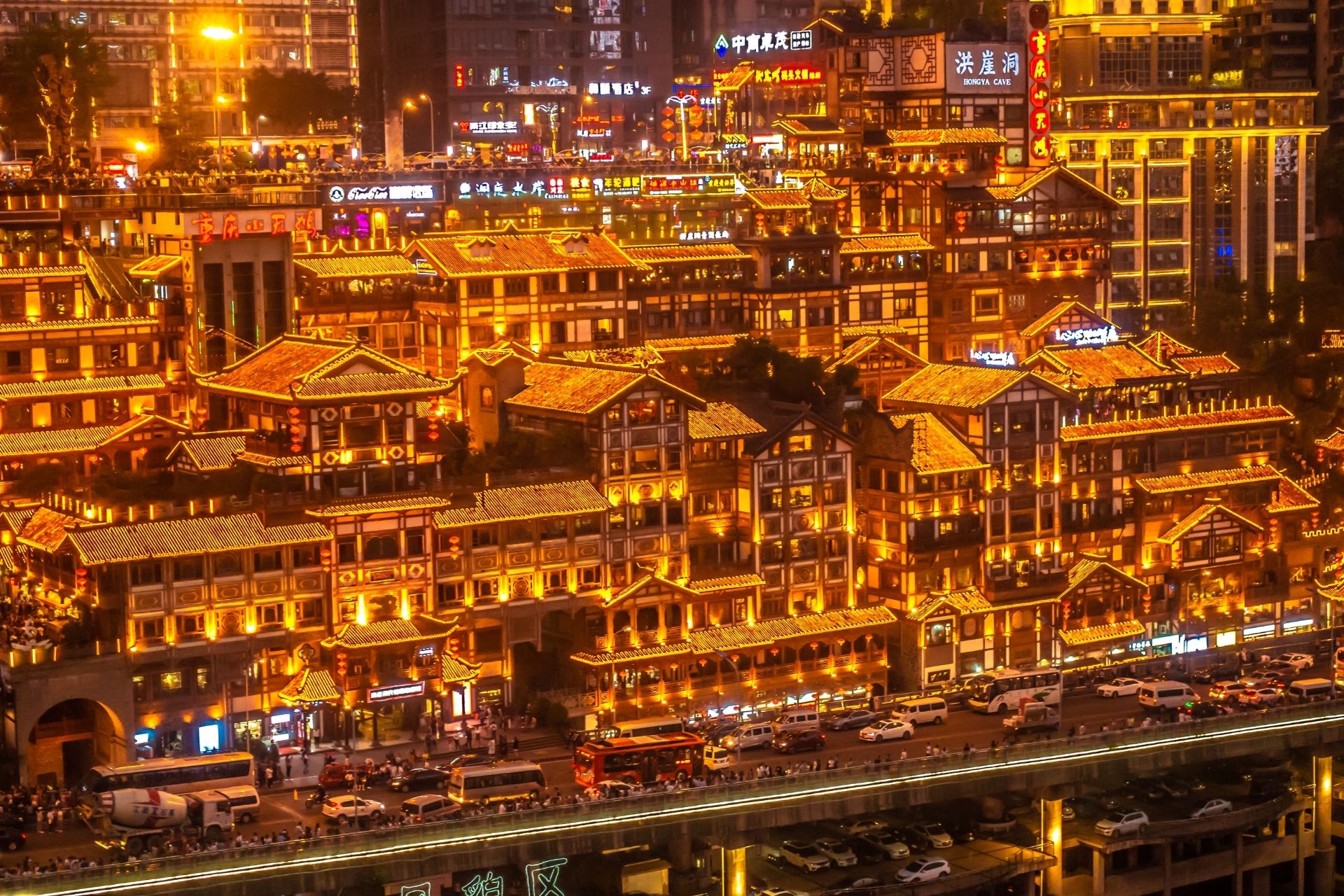
Hongyadong: Located at the confluence of the Yangtze and Jialing Rivers, Hongyadong features traditional Bayu‑style stilt houses built along the cliffside. It combines cultural attractions, dining, shopping and riverfront scenery, and is directly connected to Jiefangbei.

Night view of hongya cave, Chongqing,China Chongqing Bridge with Cruise at Night chongqing river night cruise Chongqing City Cruise at Night

Accommodation: ★★★★ Yifei Hotel Hongyadong Jiefangbei or similar

Meals: Breakfast | Lunch | Dinner

Day 3 – Dazu Rock Carvings (Baodingshan & Beishan)

Morning:

After breakfast, drive to Dazu to visit the world‑renowned Dazu Rock Carvings, including Baodingshan and Beishan (with round‑trip scenic shuttle bus included).

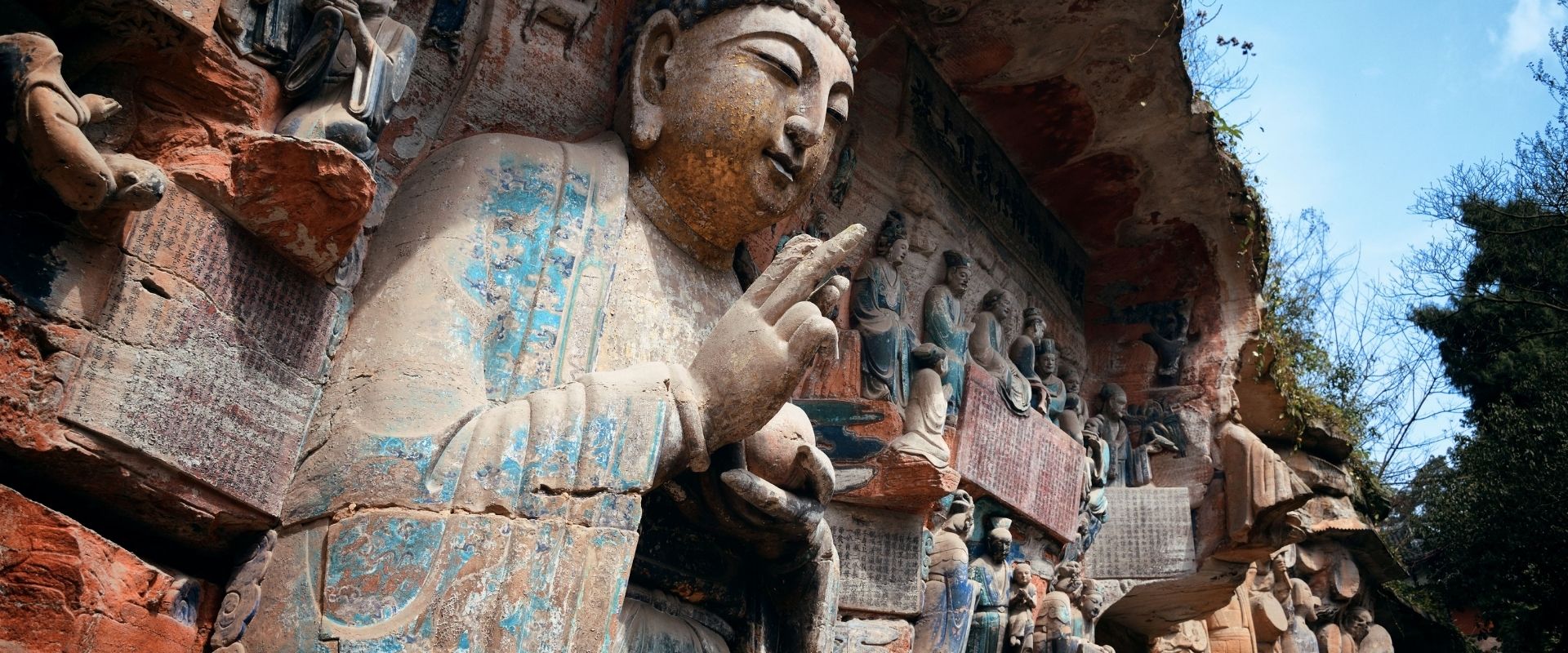
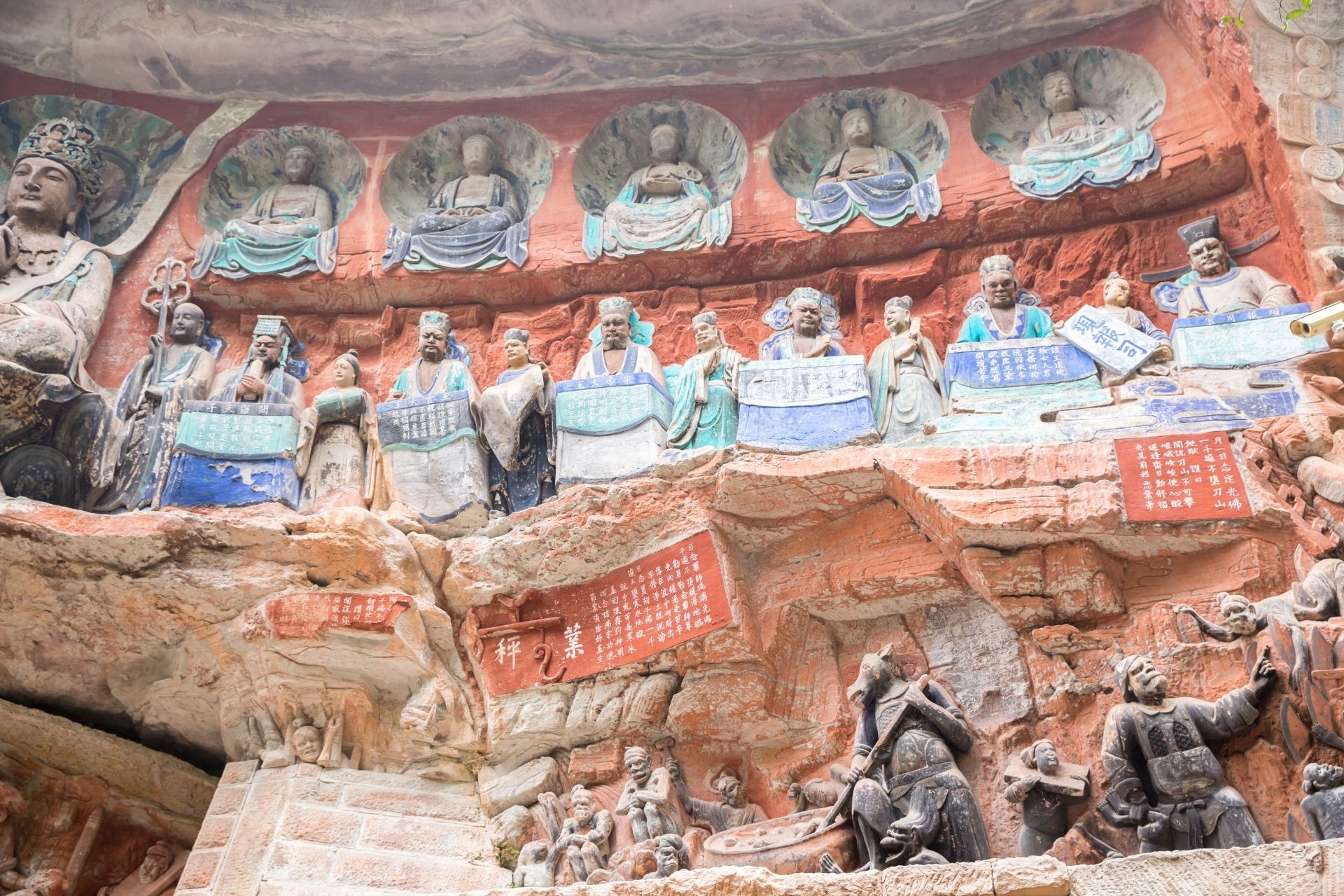
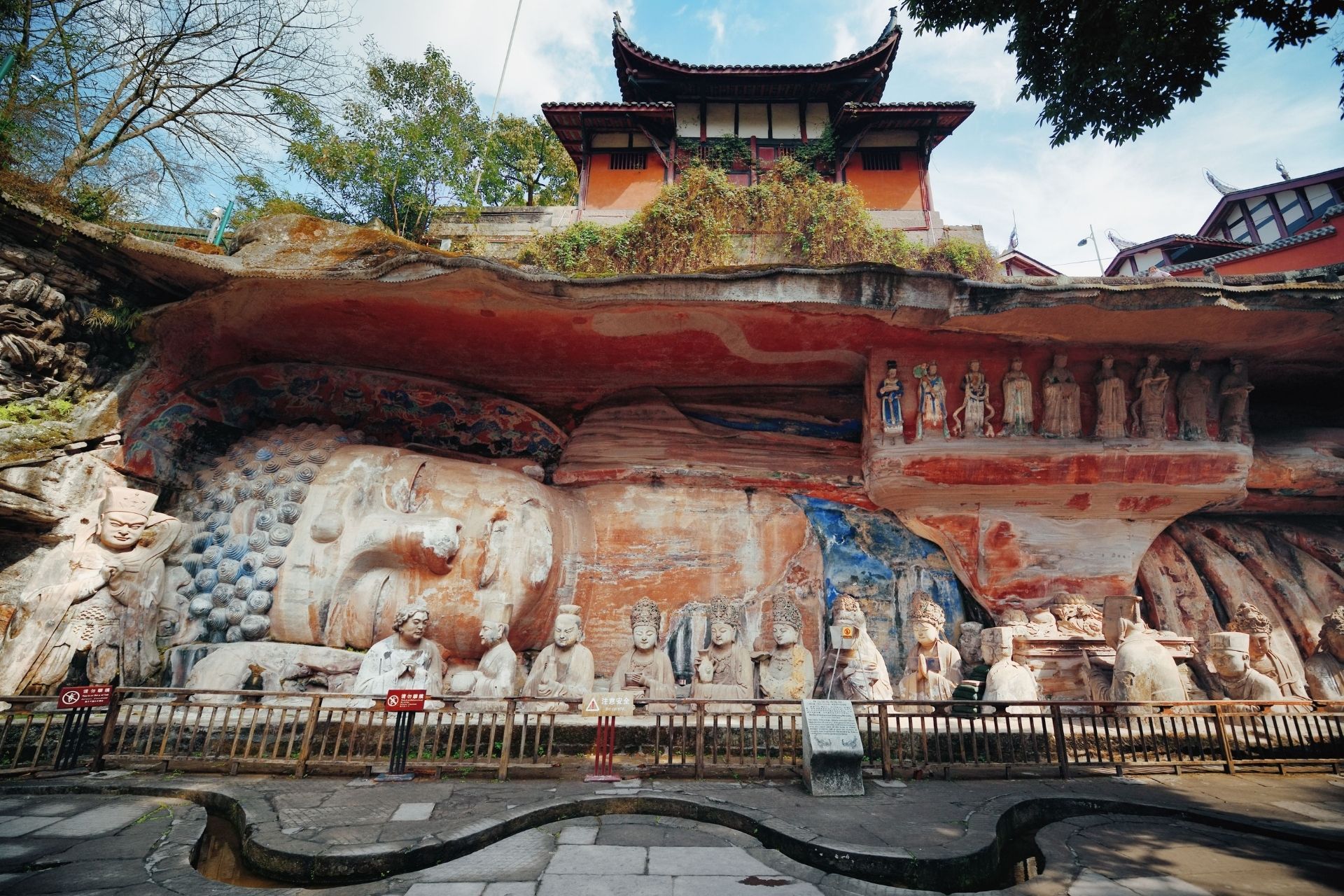
The Dazu Rock Carvings date back to 650 AD (Tang Dynasty) and flourished during the Song Dynasty. The site consists of 75 cliff‑carving locations across five mountains, featuring more than 50,000 statues and 100,000 inscriptions.

The carvings are famous for their harmonious blend of Confucianism, Buddhism and Taoism, as well as their vivid, human‑centred artistic style.

Highlights include:

  • Baodingshan – Great Buddha Bend: A grand, immersive cliff‑carving complex with monumental sculptures depicting Buddhist cosmology.
  • Beishan – Thousand‑Hand Guanyin: Known as the “Eastern Venus,” celebrated for its elegance and exquisite craftsmanship.
Considered the pinnacle of late Chinese grotto art, Dazu is often called “the last great monument in the history of world cave art.”

Lunch: Dazu Lotus‑style Feast


Afternoon:

Continue exploring the Dazu grottoes at a relaxed pace. The site includes both free and ticketed areas, and a half‑day visit is recommended for a deeper appreciation of the carvings, inscriptions and cultural significance.

After the visit, return to Chongqing.

Stone Carving Baodingshan, Dazu, Chongqing Dazu Rock Carvings with Temple, Chongqing, China

Dinner: Dazu Lotus‑style Feast

Evening:

Free time to rest or explore the Jiefangbei area on your own.

Accommodation: ★★★★ Yifei Hotel Hongyadong Jiefangbei or similar

Meals: Breakfast | Lunch | Dinner

Day 4 – Chongqing Zoo • Hotpot Museum • Kuixing Tower • Jiefangbei Pedestrian Street

Morning:

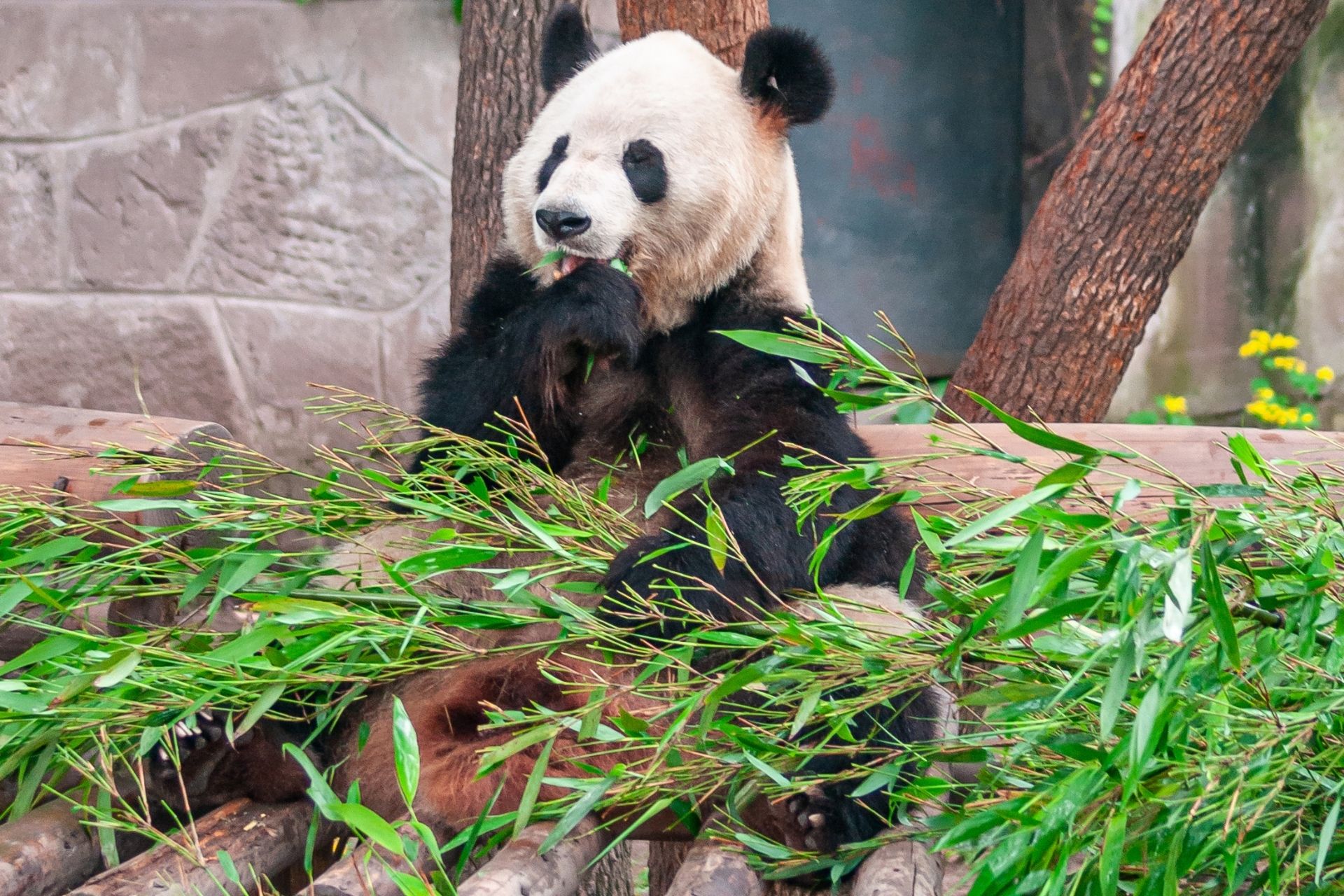
Your guide will pick you up from the hotel and take you to visit the Chongqing Zoo, home to giant pandas and many native species. The zoo offers spacious enclosures, shaded walking paths and excellent opportunities to observe pandas up close in a relaxed environment.

Panda eating its lunch, Chongqing Zoo, China

Lunch:

Enjoy a local lunch.

Afternoon:

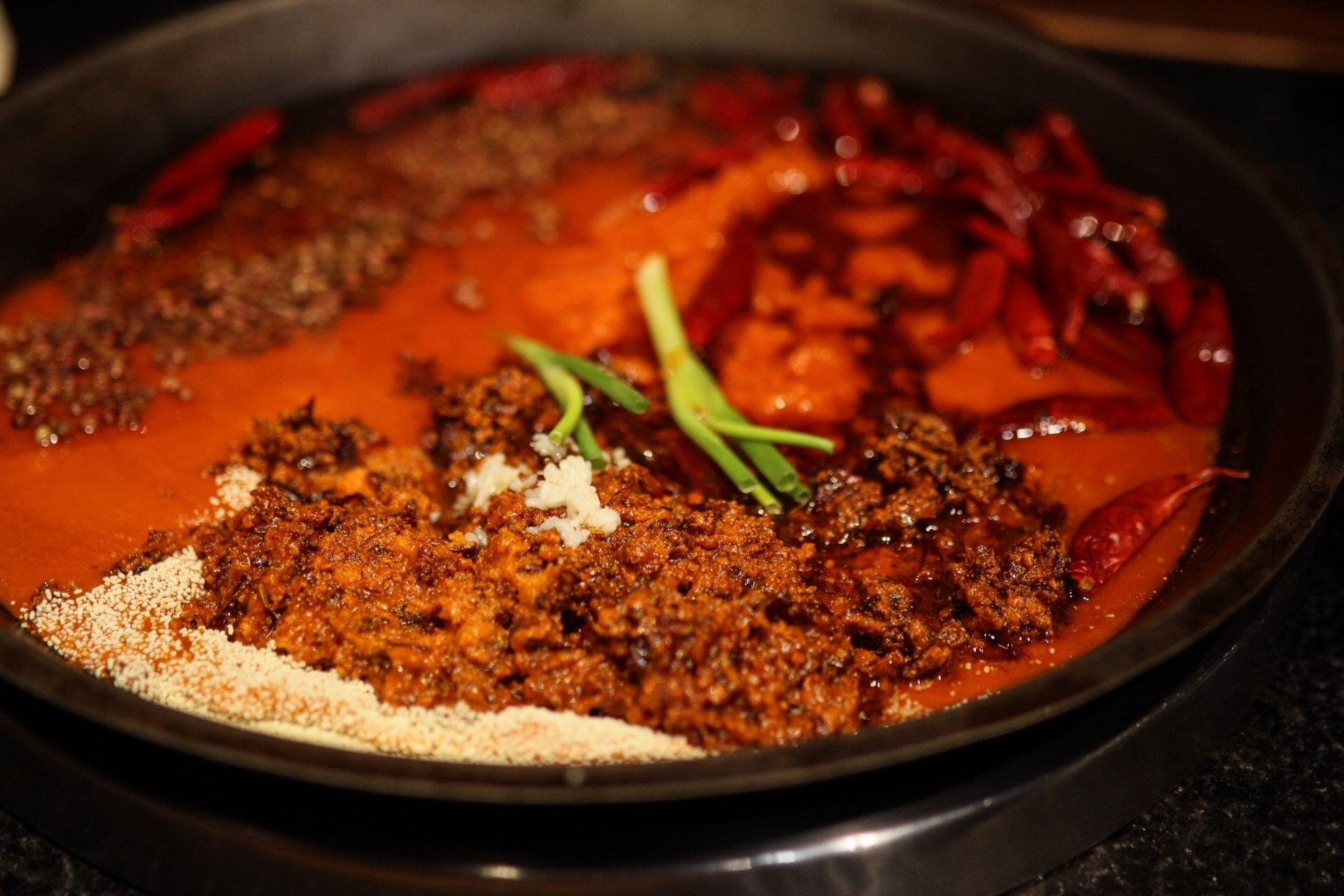
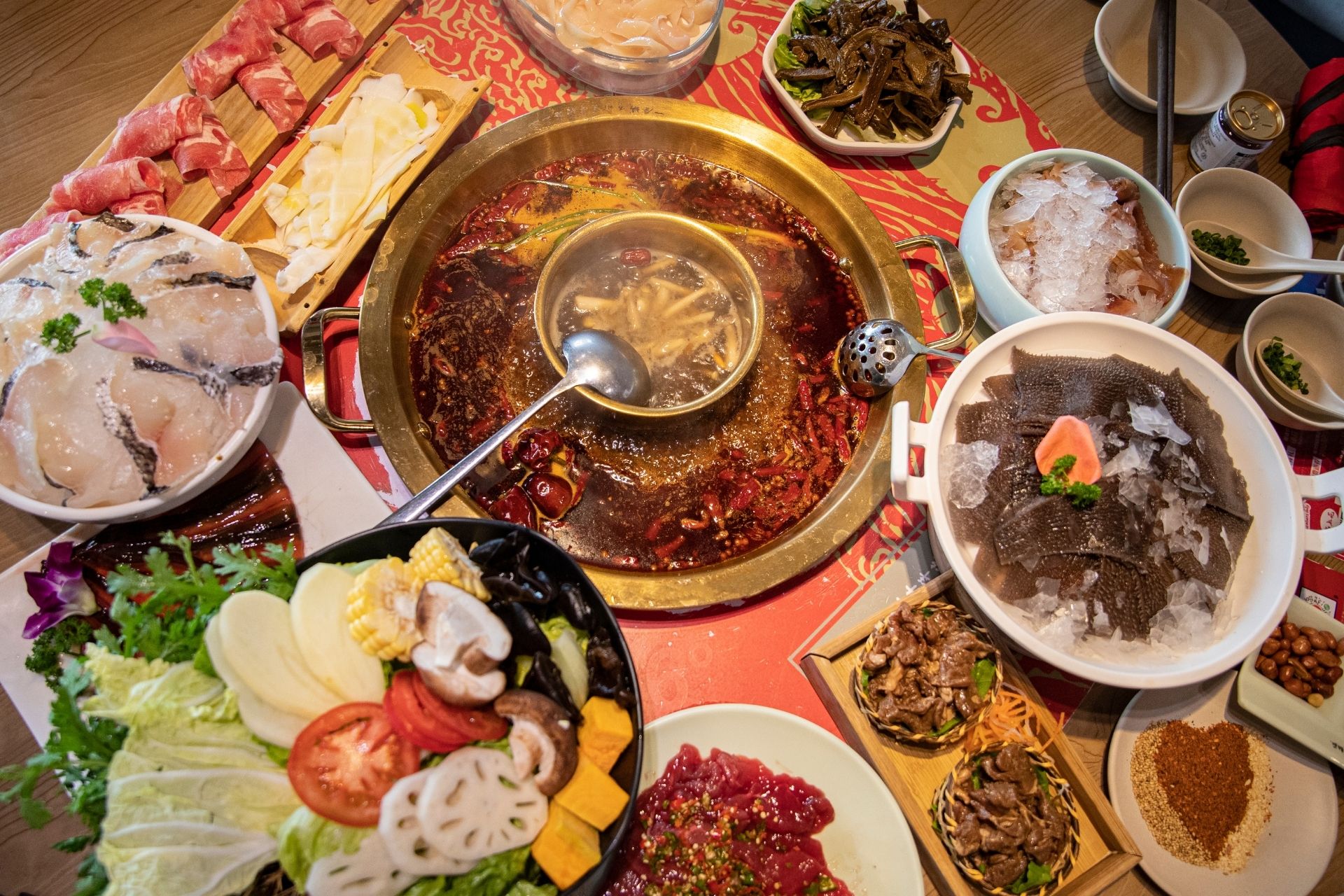
After lunch, visit the Zhou Junji Hotpot Museum, one of Chongqing’s signature industrial‑culture attractions. The museum showcases the origins and evolution of Chongqing hotpot, including historical utensils, documents and recreated old‑Chongqing street scenes.

Visitors can observe the transparent production line, learn about the traditional hotpot base‑making process, and even participate in a fun DIY hotpot base workshop. It’s an excellent place to understand the cultural roots of Chongqing’s most famous cuisine.

Chongqing hot pot base, China Chongqing hot pot, China

Continue to Kuixing Tower, a popular 8D‑city landmark known for its 22‑storey sky plaza and suspended sky bridge — a perfect example of Chongqing’s dramatic three‑dimensional urban landscape.

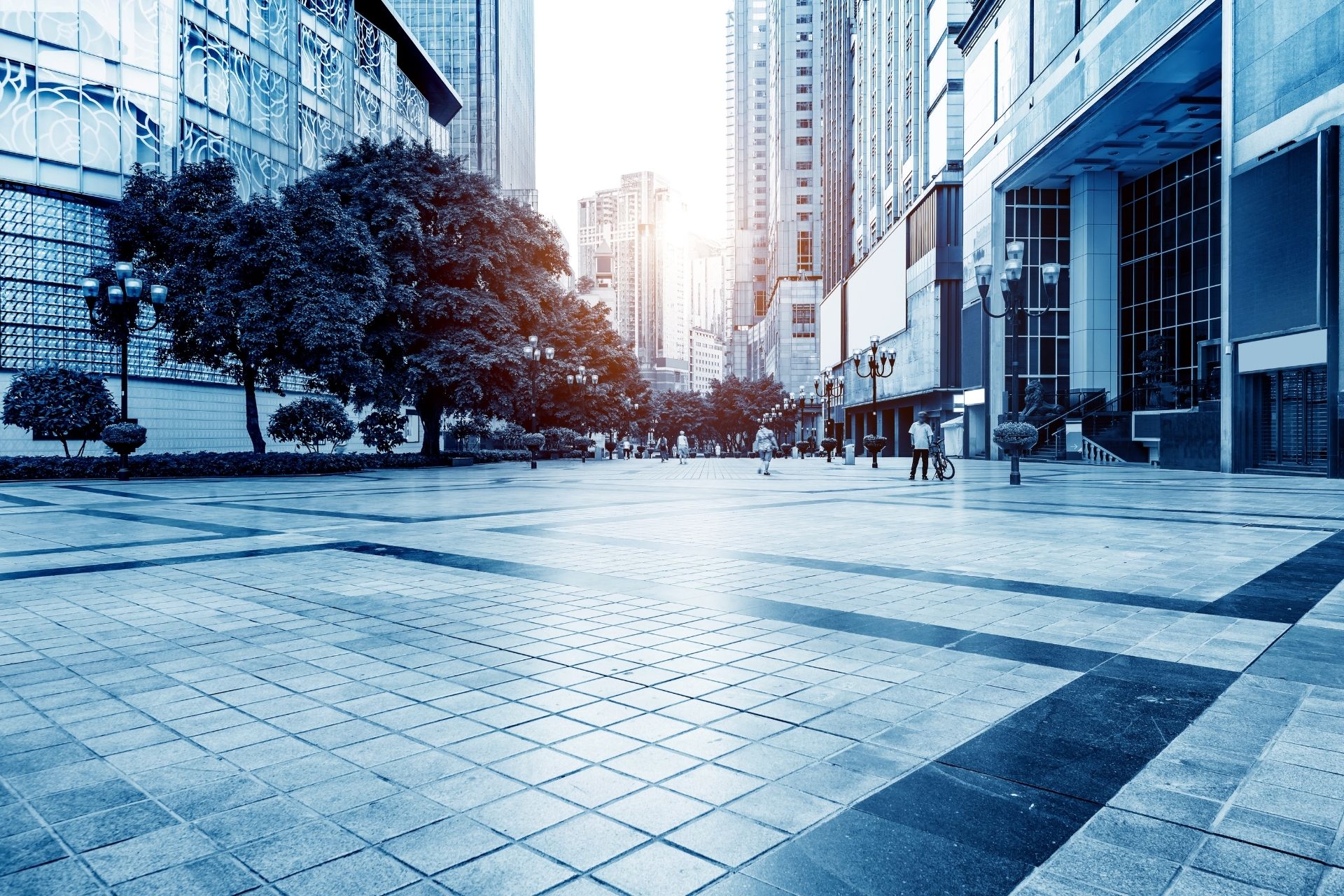
Stroll through the Jiefangbei Pedestrian Street, the city’s most famous commercial district. Centered around the historic Victory Monument, this was the first major pedestrian shopping street in western China and remains a vibrant hub of dining, shopping and entertainment.

Chongqing Jiefangbei, China

Dinner:

Enjoy dinner at a local restaurant.

Evening:

After dinner, return to your hotel to rest or explore the Jiefangbei area on your own.

Accommodation: ★★★★ Yifei Hotel Hongyadong Jiefangbei or similar

Meals: Breakfast (Hotel) | Lunch | Dinner

Day 5 – Jinfo Mountain • Hot Spring Resort Stay

Morning:

After breakfast, depart for Nanchuan to visit the UNESCO‑listed Jinfo Mountain. Your visit includes the full scenic package: entrance ticket + West Slope cable car (round trip) + West Slope shuttle bus (round trip) + mountaintop sightseeing bus (round trip).

Jinfo Mountain is world‑renowned for its vast karst plateau landscape, dramatic cliffs, cloud‑shrouded peaks and rare ancient plant communities found at this latitude. With ever‑changing scenery across the four seasons, it is a sanctuary for exploring geological wonders and biodiversity.

Lunch:

Enjoy a local lunch.

Afternoon:

Continue exploring the scenic areas of Jinfo Mountain at a relaxed pace, taking in panoramic viewpoints, alpine meadows and the refreshing mountain air.

After the visit, head to Tianxing Town, a hot‑spring resort area located at the foot of Jinfo Mountain. The town is built around natural geothermal resources and features high‑quality hot springs rich in strontium and metasilicic acid — known for their therapeutic and wellness benefits.

Chongqing Jiefangbei, China

Dinner:

Enjoy dinner at a local restaurant.

Evening:

Check in to your hot spring hotel. Complimentary hot spring tickets are included, allowing you to relax in the mineral‑rich pools and unwind after a day of mountain exploration.

Accommodation: ★★★★ Tianxing Liangjiang Holiday Hotel or similar

Meals: Breakfast (Hotel) | Lunch | Dinner

Day 6 – Wulong Three Natural Bridges • Fairy Mountain

Morning:

After breakfast, depart for Wulong to visit the spectacular Three Natural Bridges, including the full scenic package: eco‑shuttle bus + Tianlong Elevator + exit electric cart.

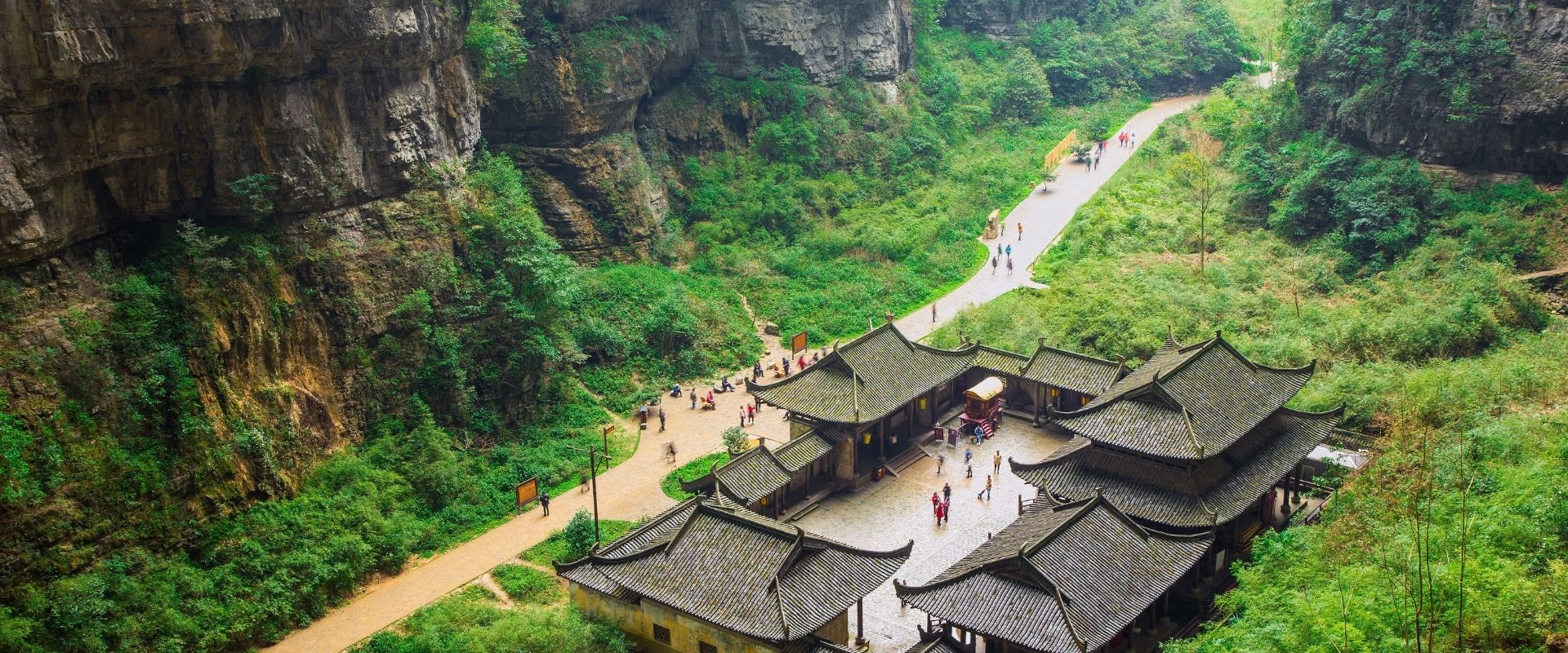
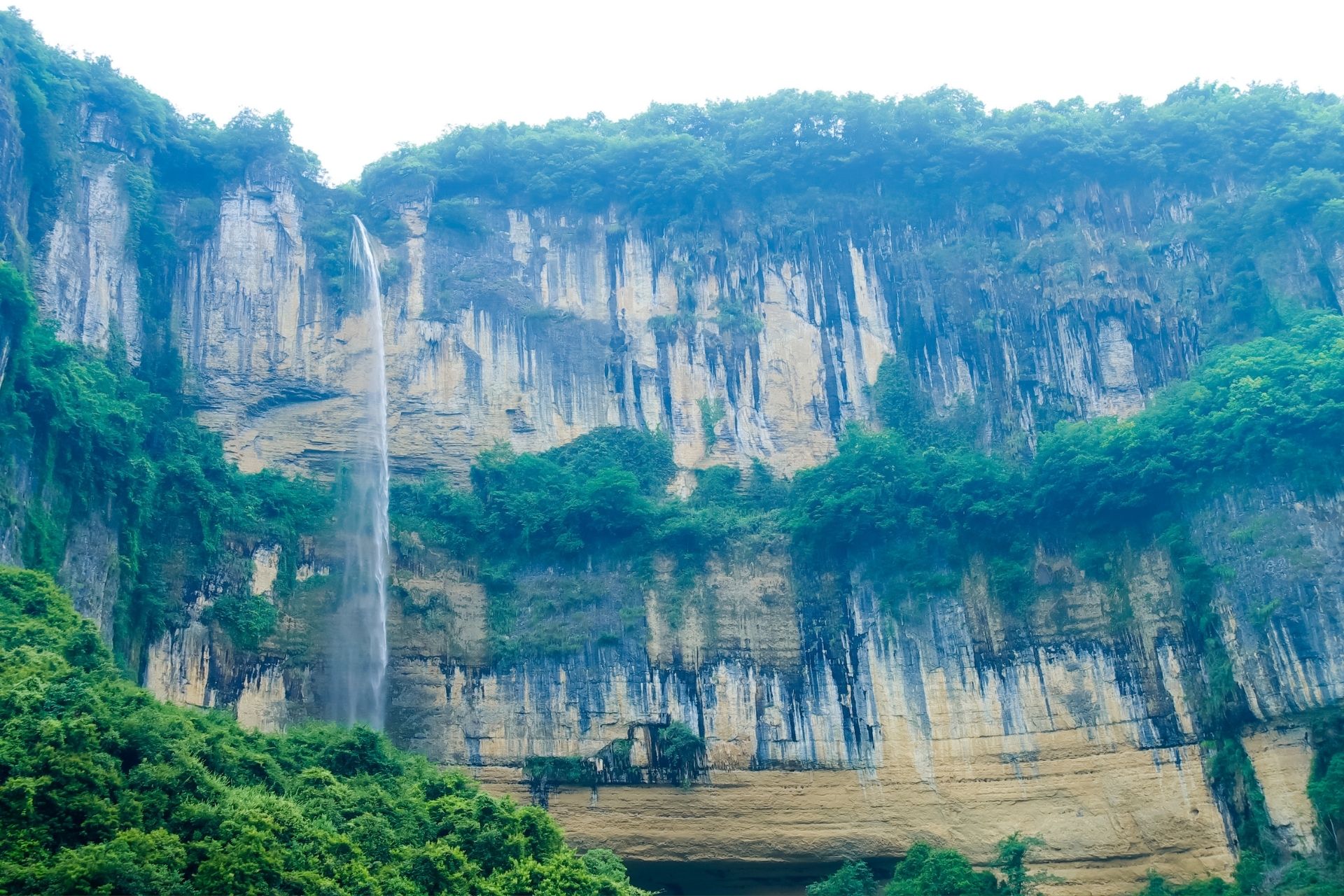
The Three Natural Bridges are a world‑class karst landscape featuring three giant limestone arches formed by geological sinkholes. Known for their grandeur, mystery and dramatic scale, they are praised by geologists as “Earth’s heritage and a world wonder.”

This area also served as a filming location for the movie Transformers: Age of Extinction, making it one of the most iconic natural attractions in Chongqing.

Three Natural Bridges, Wulong ancient natural bridge,Chongqing China

Lunch:

Enjoy a local lunch.

Afternoon:

Continue to Fairy Mountain, including the scenic sightseeing train.

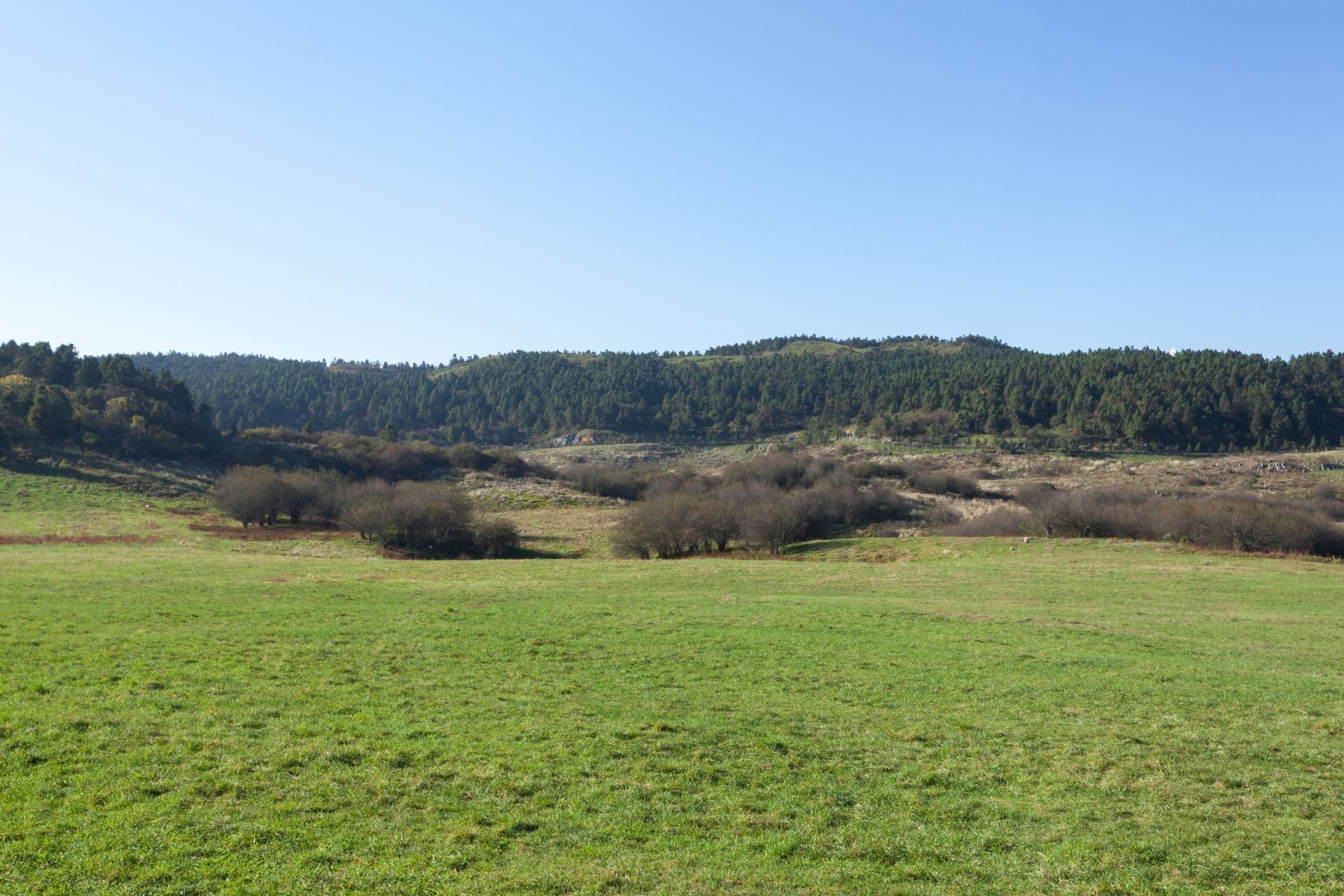
Fairy Mountain features over 330,000 mu of forest and 100,000+ mu of natural grassland, with an average elevation of 1,900 meters and a cool annual temperature of 10.2°C.

The vast alpine meadows, rolling hills, and lush forests create scenery often compared to:

  • “The Southern Pastureland”
  • “The Oriental Switzerland”
  • “The Summer Palace of Mountain City”

The landscape resembles a beautiful fairy‑tale painting, making it ideal for photography, walking and enjoying fresh mountain air.

Chongqing Fairy mountain Grassland, China

Dinner:

Enjoy dinner at a local restaurant (¥50 per person).

Evening:

Check in to your hotel in Wulong and enjoy a relaxing evening.

Accommodation: ★★★★ Wulong Yichengji Hotel or similar

Meals: Breakfast (Hotel) | Lunch | Dinner

Day 7 – Project 816 Nuclear Base • Baiheliang Underwater Museum

Morning:

After breakfast, depart for Fuling to visit the extraordinary Project 816 Nuclear Base, one of China’s most secret Cold War military sites.

Approved by Premier Zhou Enlai in 1966, Project 816 was designed as a top‑secret nuclear fuel production base. More than 60,000 workers labored anonymously for 18 years until construction stopped in 1984.

The underground complex stretches 25 km with a massive 12‑level main cavern reaching a height of 79.6 meters, engineered to withstand nuclear blasts and earthquakes.

The highlight is the Reactor Hall, a monumental chamber symbolizing the spirit of China’s Third Front construction era. Today, the site is fully declassified and open to visitors.

Lunch:

Enjoy lunch in Fuling.

Afternoon:

After lunch, visit the remarkable Baiheliang Underwater Museum, the world’s first underwater heritage museum accessible without diving.

Known as the “world’s first ancient hydrological station”, Baiheliang preserves stone inscriptions carved from the Tang to Qing dynasties, including 165 water‑level inscriptions and 18 stone fish used historically to record drought years.

The museum uses an innovative “no‑pressure underwater chamber” design, allowing visitors to descend 40 meters below the Yangtze River via escalator into a circular underwater corridor.

Through 23 observation windows, you can view ancient calligraphy — including works attributed to Huang Tingjian — preserved in their original location. Combined with surface exhibitions and underwater exploration, the museum is a living testament to a thousand years of Yangtze River hydrology and Chinese calligraphic art.

Dinner:

Enjoy dinner at a local restaurant.

Evening:

Check in to your hotel in Fuling and enjoy a relaxing evening.

Accommodation: ★★★★ Wulong Yichengji Hotel or similar

Meals: Breakfast (Hotel) | Lunch | Dinner

Day 8 – Return to Chongqing • Shibati Traditional District • WFC Sky Observatory

Morning:

Enjoy a leisurely morning, after breakfast, return to Chongqing at a relaxed pace.

Lunch:

Enjoy lunch on your own or with your guide’s recommendation.

Afternoon:

Visit the Shibati Traditional District, a historic pathway connecting the upper city (Jiefangbei) with the lower riverside wharfs. Named after the original eighteen stone steps beside an ancient well, Shibati has been revitalized through protective restoration, preserving its seven streets, six alleys, and traditional stilt‑house architecture.

Must‑see highlights include:

  • Ancient Well Spring Breeze
  • Old Tunnel Ruins
  • Mountain City Memory Hall
  • Filming locations from “I Belonged to You”

Optional Activities:

  • Shibati “Yuzhou Story” Gaiwan Tea + Live Performance
  • WFC Sky Observatory Afternoon Tea Package

Dinner:

Enjoy dinner at a local restaurant.

Evening:

After dinner, ascend to the WFC Sky Observatory, located on the 73rd–75th floors of the Chongqing World Financial Center at an elevation of 590 meters.

A 47‑second high‑speed elevator takes you directly to the viewing levels:

  • 73–74F: Circular indoor glass observation deck
  • 75F: Open‑air platform with 360° panoramic views

From here, you can admire breathtaking night views of the Yangtze and Jialing Rivers, including the Yangtze Cableway, Hongyadong, and Qiansimen Bridge. Sunset and evening lights are especially stunning. The observatory is easily accessible from Xiaoshizi Station (Metro Line 1/6).

chongqing overview at night, China chongqing night view, China

Accommodation: ★★★★ Yifei Hotel Hongyadong Jiefangbei or similar

Meals: Breakfast (Hotel) | Lunch | Dinner

Day 9 – Robotics & AI Experience Center • Airport Transfer

Morning:

After breakfast, visit the Chongqing Robotics & AI Application Exhibition Center. The center showcases a wide range of intelligent technologies, from advanced industrial robots to friendly household service robots. Through hands‑on interaction, you will gain a clear understanding of how AI is transforming various industries and everyday life, revealing the exciting possibilities of future technology.

chongqing overview at night, China

Lunch:

Enjoy lunch arranged by your guide.

Afternoon:

After the visit, your guide will transfer you to the airport at an appropriate time for your departure flight.

Meals: Breakfast

Service Standards for This Chongqing Escorted Tour

Inclusions

  1. Accommodation: 8 nights in carefully selected 4‑star hotels, offering modern facilities and a comfortable stay throughout the journey.
  2. Meals: Daily breakfast plus selected local specialty lunches and dinners as listed in the itinerary.
  3. Transportation: Private air‑conditioned vehicle for all transfers and touring, including required scenic‑area shuttle buses.
  4. Guide: Professional English‑speaking tour guide providing full service throughout the tour.
  5. Entrance Fees: First‑gate entrance tickets for all attractions listed in the itinerary, including cable cars, eco‑shuttles and internal scenic transport where required.
  6. Insurance: Travel accident insurance provided in accordance with local regulations.

Exclusions

  1. Single‑room supplement for travellers requesting a private room.
  2. Personal expenses such as drinks, laundry, room service or additional snacks.
  3. Optional activities not included in the itinerary (e.g., shows, upgrades, add‑on experiences).
  4. Additional travel insurance beyond the included accident coverage.
  5. Costs arising from force majeure events (weather, delays, cancellations, etc.).
  6. International flights to/from Chongqing.

Frequently Asked Questions

1. What is the difficulty level of this tour?

The tour involves easy to moderate walking. Scenic areas like Wulong and Dazu include steps, but shuttle buses and elevators reduce physical strain. Suitable for most travellers, including seniors.

2. When is the best time to visit Chongqing?

The tour operates year‑round, but the most comfortable seasons are spring (Mar–Jun) and autumn (Sep–Nov), when temperatures are mild and visibility is excellent.

3. Can this tour be customised?

Yes. As a escorted tour, it can be tailored for couples, families, small groups or travellers with specific interests such as photography, food, culture or nature.

4. Are meals included?

Daily breakfast is included, along with selected local specialty lunches and dinners as listed in the itinerary. Chongqing hotpot and regional dishes are featured.

5. Is the Two Rivers Night Cruise included?

Yes. The cruise is included in the tour package and offers stunning views of Chongqing’s illuminated skyline, including Hongyadong and the city’s iconic bridges.

6. Is the Liziba “train through the building” monorail safe to visit?

Yes. The Liziba Station is a fully operational Chongqing Rail Transit stop designed with reinforced engineering to allow the monorail to pass through the residential building safely. Viewing platforms are available for tourists.

7. What is the Liziba “train through the building” monorail?

Liziba Station on Chongqing Rail Transit Line 2 is one of the city’s most iconic engineering landmarks. The monorail line passes directly through the 6th–7th floors of a residential building — a unique solution created due to Chongqing’s mountainous terrain and limited urban space. The station is fully integrated into the building’s structure, with noise‑reduction technology and vibration‑control engineering ensuring safety and comfort for residents.

8. Is Liziba worth visiting?

Absolutely. Liziba is one of Chongqing’s most famous “8D city” attractions and a viral social‑media landmark. Watching the monorail glide through the building is a uniquely Chongqing experience, and the dedicated viewing platform offers excellent photo opportunities. It’s a quick stop, easy to access, and highly recommended for first‑time visitors.

9. What is Ciqikou Ancient Town?

Ciqikou Ancient Town is a 1,000-year-old riverside settlement in Shapingba District, Chongqing. Once a major porcelain-trading port during the Song, Ming, and Qing dynasties, it is now a well-preserved historic area known for its stone-paved streets, traditional wooden architecture, tea houses, folk performances, and vibrant food stalls. Often called “Little Chongqing,” it offers a glimpse into the city’s cultural and commercial past.

10. Is Ciqikou Ancient Town worth visiting?

Yes — Ciqikou is one of Chongqing’s most popular cultural attractions. Visitors enjoy its lively atmosphere, traditional architecture, local snacks, handicraft shops, and tea houses overlooking the Jialing River. It is easily accessible by metro and offers an enjoyable half-day experience for anyone interested in history, culture, or street food.

11. How much time do we spend in Ciqikou Ancient Town?

Typically 1.5–2 hours. This allows time to explore the old streets, teahouses, local snacks and traditional handicraft shops at a comfortable pace.

12. What is E’ling Park?

E’ling Park is one of Chongqing’s oldest hillside gardens, built in 1909 and located on a high ridge in Yuzhong District. It features traditional pavilions, shaded walking paths and panoramic 360° views of the Yangtze and Jialing Rivers, making it a peaceful escape in the heart of the city.

13. Is E’ling Park worth visiting?

Yes. The park is easy to walk, suitable for all ages and offers some of the best viewpoints in central Chongqing. It’s a relaxing stop for families, seniors and anyone who enjoys scenic city landscapes.

14. Is E’ling Park suitable for all ages?

Yes. The park features gentle walking paths, shaded areas and panoramic viewpoints. It is suitable for families, seniors and casual walkers.

15. What is the Two Rivers Night Cruise?

The Two Rivers Night Cruise is a scenic boat journey along the Yangtze and Jialing Rivers, offering illuminated views of Chongqing’s skyline. From the deck, you can admire landmarks such as Hongyadong, Qiansimen Bridge, the Yangtze Cableway and the glowing riverfront architecture that defines the city’s famous nightscape.

16. Is the Two Rivers Night Cruise worth experiencing?

Yes. It is one of Chongqing’s signature experiences and a highlight for first‑time visitors. The cruise provides unmatched panoramic views of the city’s lights, bridges and dramatic riverside cliffs — a relaxing and memorable way to appreciate Chongqing’s unique beauty.

17. What can I expect on the Two Rivers Night Cruise?

The cruise sails along the Yangtze and Jialing Rivers, offering spectacular views of Chongqing’s illuminated skyline, including Hongyadong, Qiansimen Bridge and the riverside towers.

18. What is the Hongyadong Stilt House Complex?

Hongyadong is a landmark riverside complex built in the traditional Bayu stilt‑house style. Located in central Chongqing, it features terraced wooden buildings, lantern‑lit walkways, local snacks, handicraft shops and dramatic night views overlooking the Jialing River and Qiansimen Bridge.

19. Is Hongyadong worth visiting?

Yes. Hongyadong is one of Chongqing’s most iconic attractions, especially at night when the entire complex lights up. It’s ideal for photography, river views, street food and experiencing the city’s signature “mountain‑city” architecture.

20. Is Hongyadong very crowded?

Hongyadong is one of Chongqing’s most popular attractions, especially at night. Your guide will help you navigate the best viewpoints and avoid peak congestion where possible.

21. What are the Dazu Rock Carvings (UNESCO)?

The Dazu Rock Carvings are a UNESCO World Heritage Site located in Dazu District, Chongqing. Created between the 7th and 13th centuries, they include more than 50,000 statues and over 100,000 carved inscriptions across 75 grotto sites. The carvings blend Buddhist, Taoist, and Confucian themes and are renowned for their exceptional preservation and artistic detail, especially at Baodingshan and Beishan.

22. Are the Dazu Rock Carvings worth visiting?

Yes — the Dazu Rock Carvings are one of Chongqing’s most significant cultural attractions and its only UNESCO World Cultural Heritage Site. Visitors appreciate the exquisite craftsmanship, peaceful mountain setting, and the rare opportunity to explore some of the finest examples of Chinese grotto art. It is an excellent destination for history lovers, culture enthusiasts, and anyone interested in ancient religious art.

23. How difficult is the walking at Dazu Rock Carvings?

The walking paths are mostly paved and moderate. Some sections include steps, but the pace is relaxed and suitable for most travellers.

24. What is the Zhou Junji Hotpot Museum?

The Zhou Junji Hotpot Museum is a cultural attraction dedicated to the origins and evolution of Chongqing hotpot. It features historical utensils, old‑Chongqing street scenes, a transparent production line and interactive exhibits that show how traditional hotpot base is made. Visitors can also join a hands‑on DIY hotpot base workshop.

25. Is the Zhou Junji Hotpot Museum worth visiting?

Yes. It’s one of the best places to learn about Chongqing’s signature cuisine and offers a fun mix of culture, history and hands‑on experience. The museum appeals to food lovers, families and anyone curious about how authentic hotpot flavors are created.

26. Is the hotpot base‑making experience suitable for beginners?

Absolutely. The museum staff guide you step‑by‑step through the process, making it fun and accessible even if you’ve never cooked hotpot before.

27. What is Jinfo Mountain & the Hot Spring Area?

Jinfo Mountain is a UNESCO World Natural Heritage site known for its vast karst plateau, cloud‑covered peaks and rare ancient plant ecosystems. The surrounding Tianxing hot spring area draws from natural geothermal sources, offering mineral‑rich waters high in strontium and metasilicic acid, valued for their wellness benefits.

28. Is Jinfo Mountain & the Hot Springs worth visiting?

Yes. Jinfo Mountain offers dramatic scenery, cool mountain air and unique geological landscapes, while the hot springs provide a relaxing, rejuvenating experience. It’s an excellent combination of nature, wellness and scenic beauty, suitable for all ages.

29. What should I wear for Jinfo Mountain?

Comfortable walking shoes and layered clothing are recommended. Weather can change quickly at higher altitudes, so a light jacket is useful.

30. What are the Three Natural Bridges in Chongqing?

The Three Natural Bridges, located in Wulong District, are a UNESCO-listed karst landscape featuring three enormous limestone arch bridges: Tianlong, Qinglong, and Heilong. Formed by millions of years of natural erosion, they are among the largest natural stone bridges in the world and are surrounded by dramatic sinkholes, cliffs, and canyon scenery.

31. Are the Three Natural Bridges worth visiting?

Yes — the Three Natural Bridges are one of Chongqing’s most iconic natural attractions. Visitors praise the breathtaking scale of the arches, the cinematic scenery, and the well-maintained walking paths. It is an excellent destination for nature lovers, photographers, and anyone seeking a memorable outdoor experience.

32. Is the Three Natural Bridges scenic area physically demanding?

The area includes some stairs and uneven paths, but shuttle buses and elevators (such as the Tianlong Elevator) reduce the amount of climbing required.

33. What is Fairy Mountain National Forest Park?

Fairy Mountain National Forest Park, also known as Fairy Mountain, is a 5A-level scenic area in Wulong District, Chongqing. It features vast alpine grasslands, dense forests, cool summer temperatures, and snowy winter landscapes. Sitting at an elevation of around 1,900–2,033 meters, it is often called the “Oriental Switzerland” for its rolling meadows, grazing horses, and peaceful mountain scenery.

34. Is Fairy Mountain National Forest Park worth visiting?

Yes — Fairy Mountain is one of Chongqing’s most popular nature destinations. Visitors enjoy its cool climate, wide open grasslands, forest trails, and beautiful seasonal scenery. It is ideal for relaxing walks, photography, and escaping the heat of the city, and pairs perfectly with nearby attractions such as the Three Natural Bridges.

35. What is the weather like on Fairy Mountain?

Fairy Mountain has a cool alpine climate year‑round. Even in summer, temperatures are mild, so bringing a light jacket is recommended.

36. What is the 816 Underground Nuclear Project?

The 816 Underground Nuclear Project is a massive Cold War–era nuclear facility built inside a mountain in Fuling, Chongqing. Originally intended for plutonium production, it was never completed or used. Today, it is open to visitors as the world’s largest man-made cave system, featuring extensive tunnels, machinery halls, and historical exhibits.

37. Is the 816 Underground Nuclear Project worth visiting?

Yes — it is one of Chongqing’s most unique historical attractions. The scale of the underground complex is impressive, and the Cold War atmosphere makes it a fascinating stop for visitors interested in history, engineering, or unusual sites. The cool underground temperature also provides a refreshing break from Chongqing’s heat.

38. Is Project 816 safe to visit?

Yes. The site has been fully declassified and opened to the public. Walkways, lighting and safety measures are well maintained.

39. What is the Baiheliang Underwater Museum?

The Baiheliang Underwater Museum is the world’s first non‑diving underwater heritage museum, built to preserve the ancient Baiheliang stone ridge in Fuling, Chongqing. The ridge contains over 1,200 years of hydrological inscriptions, stone fish carvings and calligraphy that once recorded the Yangtze River’s water levels. Visitors descend via a long escalator into an underwater viewing corridor with 23 observation windows to see the original submerged carvings.

40. Is the Baiheliang Underwater Museum worth visiting?

Yes. It is a unique blend of engineering and history, offering a rare chance to view ancient inscriptions preserved beneath the Yangtze River. The museum is highly recommended for visitors interested in culture, archaeology or innovative architecture, and provides an experience found nowhere else in China.

41. Do we need to dive to see the Baiheliang Underwater Museum?

No. The museum uses a “no‑pressure underwater chamber” design, allowing visitors to walk through a glass‑enclosed underwater corridor to view the inscriptions.

42. What is the Shibati Traditional Area?

The Shibati Traditional Area is one of Chongqing’s most historic hillside neighborhoods, famous for its terraced streets, old stone steps and preserved Bayu stilt‑house architecture. The area connects the upper city with the lower riverfront and features restored alleys, traditional shops, cultural exhibits and filming locations from popular movies.

43. Is the Shibati Traditional Area worth visiting?

Yes. Shibati offers an authentic glimpse into old Chongqing, with atmospheric lanes, photo‑worthy viewpoints and a blend of history and modern culture. It’s an easy, enjoyable walk suitable for all ages and a great place to experience the city’s unique “mountain‑city” character.

42. Is Shibati suitable for photography?

Very much so. The restored stairways, stilt houses and old‑town atmosphere make it one of Chongqing’s most photogenic cultural districts.

43. What is the WFC Sky Observatory?

The WFC Sky Observatory sits on the 73rd–75th floors of the Chongqing World Financial Center, reaching about 590 meters above sea level. It features glass‑enclosed viewing decks, an open‑air rooftop platform and 360° panoramic views of the Yangtze–Jialing River confluence, Hongyadong, Qiansimen Bridge and the entire Yuzhong Peninsula. A high‑speed elevator takes visitors to the top in under a minute.

44. Is the WFC Sky Observatory worth visiting?

Yes. It is one of Chongqing’s top skyline experiences, especially at sunset and nighttime when the city lights up. The observatory offers unmatched aerial views, excellent photo spots and a dramatic perspective of Chongqing’s “mountain‑city” landscape. It’s highly recommended for first‑time visitors, photographers and anyone who enjoys panoramic city views.

45. Is the WFC Sky Observatory scary for people afraid of heights?

The observatory includes glass floors and open views from 73–75 floors high. Visitors with vertigo may find it challenging, but it is completely safe.

46. What is the Robotics & AI Application Experience Center?

The Robotics & AI Application Experience Center is a large‑scale technology venue in Chongqing showcasing more than 100 types of robots across a 13,000 m² space. Exhibits include industrial robots from brands like Kawasaki and FANUC, interactive service robots, robot dogs, humanoid robot performances, AI games, and hands‑on learning zones. The center aims to make advanced robotics and AI accessible to the public through demonstrations, educational displays, and immersive activities.

47. Is the Robotics & AI Application Experience Center worth visiting?

Yes. It is one of Chongqing’s most engaging modern attractions, especially for families, tech enthusiasts, and anyone curious about AI. Visitors can interact with robots, watch live demonstrations, try VR experiences, and even see robot‑staffed cafés. The center offers a fun, educational, and futuristic experience suitable for all ages.

48. What can I expect at the Robotics & AI Experience Center?

You’ll see demonstrations of industrial robots, service robots, AI interaction systems and hands‑on exhibits showcasing the future of intelligent technology.

49. Can we customise the escorted tour?

Yes. Our escorted tours are fully customisable and can be adapted for families, couples, small groups, or travellers with special interests such as photography, food, culture, or nature. We can adjust the itinerary, pace, accommodation, and activities to match your preferences.

50. Is this tour suitable for seniors?

Yes. The itinerary includes moderate walking, but your guide can adjust the pace and provide rest stops as needed.